Today’s Health Topic: Coronary Artery Disease

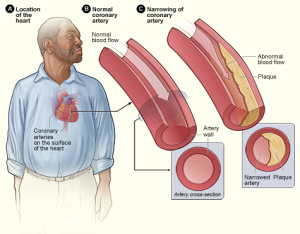
The most common type of heart disease in the U.S. is coronary artery disease where cholesterol leaves deposit of plaque and it contributes to plaque build up over a period of time. Most people don’t know that they may have this disease unless there is a heart attack or possible early signs.

atherosclerosis_2011

www.nhlbi.nih.gov

Being aware of the symptoms can give people more information on how to identify if they may have this heart disease:

  • Chest pain that could frequently occur in your upper body and back
  • Short breaths where your body is leaving lacking oxygen due to the slow or very little blood flow from your heart
  • Heart attack which means that your arteries are blocked and cause your body to be deprived of oxygen

Call for emergency help if you think that you may be experiencing some of these symptoms. So what can cause this heart disease or add more stress to the heart:

  • Lifestyle/diet is a huge factor that affects your body. If people are not active enough or/and have a bad diet, they are more likely to develop heart diseases.
  • Smoking/drugs that could another stress to the heart and affect other organs besides your heart like the lungs, stomach, liver, and more.
  • Diabetes or insulin resistance
  • High blood pressure that may be genetics, kidney problems, thyroid problems

Resource: www.mayoclinic.org


Push for No More Tobacco

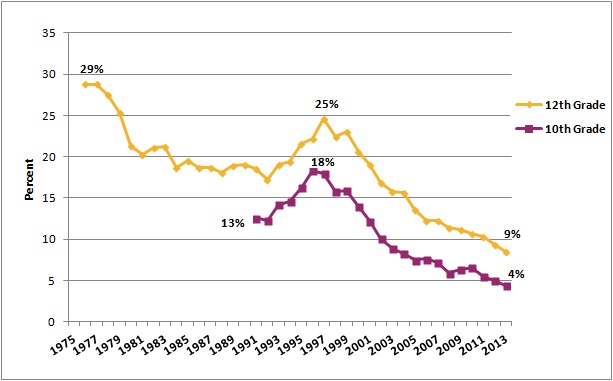
tobacco-figure1

From http://www.hhs.gov./

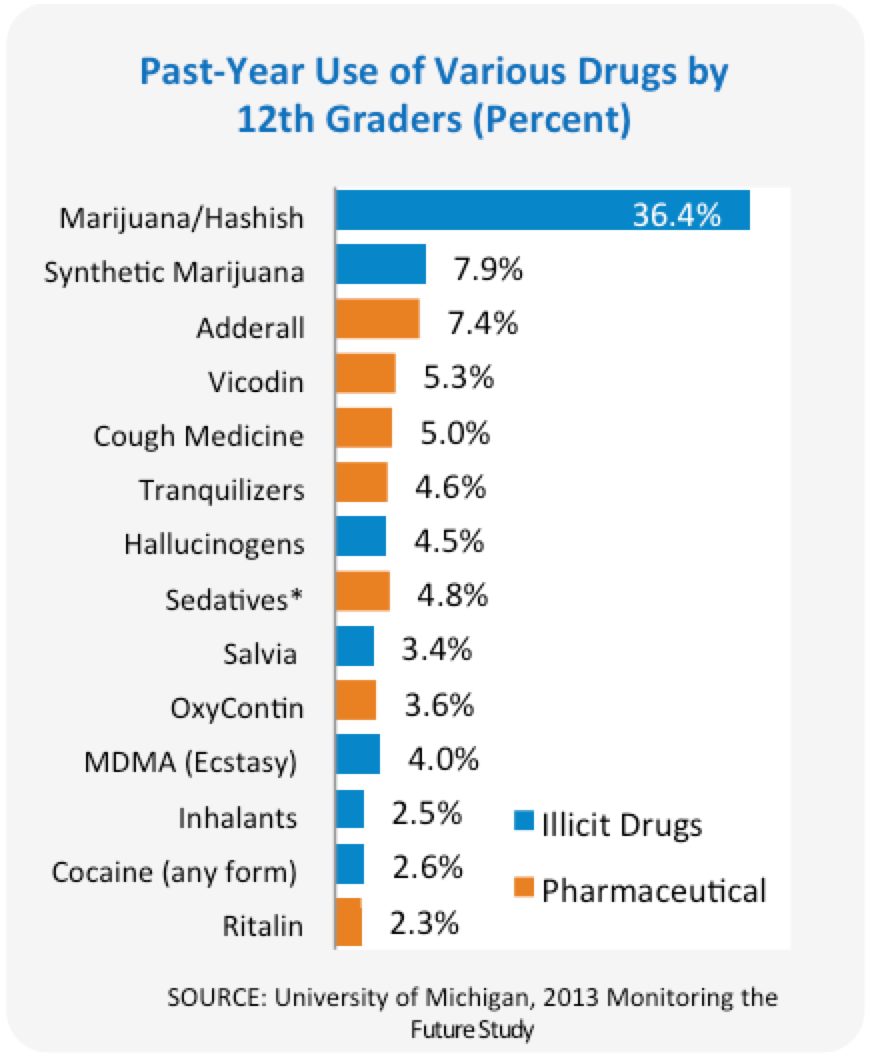
Source: Johnston, L. D., O’Malley, P. M., Bachman, J. G., & Schulenberg, J. E. (2014). Monitoring the Future national survey results on adolescent drug use, 1975-2013: Volume I, Secondary school students. Ann Arbor: Institute for Social Research, The University of Michigan.

Over the last 40 years, the use of tobacco has steadily decreased due to many enforcement of laws, regulations, government and local support, and established health awareness programs. But the concern is now focused on teens and adults who are still buying and using tobacco in different forms. Once someone has used tobacco, they could eventually or become immediately addicted to nicotine.

So what are the trends of using tobacco besides smoking tobacco:

  • Oral tobacco products that dissolves in the user’s mouth; they still contain tobacco properties that puts the user’s health at risk and they can come in different forms and flavors.
  • Hookah is a mouth piece smoking pipe that is commonly popular among teens and is used among groups where they pass it on to each other. Not only is it not sanitary of bodily fluids, it is technically like smoking a cigarette where the toxins are released and inhaled into the body.
  • Smokeless tobacco is in the form where tobacco can be sniffed and chewed. “For smokeless tobacco use, the highest rates of initiation are in the seventh through 11th grades. Although approximately equal proportions of male and female adolescents smoke cigarettes, users of smokeless tobacco products are nearly all males.” – http://www.hhs.gov/
  • E-cigarette is a cigarette that can be used electronically to vaporized a liquid that gives off the feeling that one is smoking tobacco. Although e-cigarettes has no tobacco, they still contain nicotine.

Sometimes, people don’t understand the consequences of using tobacco. The fact that tobacco was scientifically proven to lead to other cancer diseases and cause the user to have other health related problems is already a concern. We can’t stop the production of tobacco, but at least try to educate the public what tobacco can do to the body.

  • Increases the risk of almost every organ disease such as the mouth, bladder, stomach, lung, heart, kidney, and more.
  • Worsen asthma symptoms
  • Nicotine is scientifically proven to be a addictive stimulant and can cause people to rely on it for temporarily relaxation
  • Affects the body’s sexual, thyroid, pituitary, and adrenal hormones
  • Affects the production and sensitivity of insulin that could lead to type 2 diabetes and other potential health issues
  • Trying to quit smoking tobacco can cause physical reactions such as strong cravings for the substance, an increased appetite, insomnia and sleep disturbances, gastrointestinal problems and mood-related complaints including anxiety, anger and frustration, depression, irritability and restlessness. –  [source: MayoClinic]” – http://science.howstuffworks.com

So before using tobacco in any way of any form, think about how it could affect you, your body, and your health in the long term.


What causes obesity?

What causes obesity?

According to www.cdc.gov, obesity and/or overweight are labels for ranges of weight that are greater than what is generally considered healthy for a given height.

So what exactly can contribute to obesity within people? Here is the quick guide about what factors that may be lead to obesity.

  1. Lifestyle

The way we live affects our body’s health and it can sometimes show through our weight, skin, eyes, hair, and more. If we tend to have little physical activities it will or may become a habit. Or it could be the choices of foods or our eating habit. It could cause a problem with our body because there is an unbalance between intake of calories and output of energy. So balance is the very key to keeping our body healthy so that our body doesn’t take in more calories than needed for our daily activities.

  1. Genes

Genetics can be a reason why some people have more difficult time maintaining their weight or was born and struggled with being over-weighted. Having a family history in obesity can be concern and often times, it could lead to other health related problems; therefore, one should consult with their doctor for any weight concerns and questions.

  1. Outside factors

Sometimes, there are things that we take in or do that may affect our body. For example, a taking a type of drug or medicine could increase or decrease your weight. If you are on a form of birth control or using a drug for something, it is required to consult with your doctor because no one knows entirely how it may affect your body.

  1. Environment

Depending on where we live, our surrounding environment is one of the main factors that affects our physical activities. For example, one person may live in a neighborhood that does not have proper walking conditions and no walking or bicycling trails nearby. It could be a possibly reason why they would avoid going outside or not being as motivated to be more active in their environment. So our environment does an impact on how we chose to be more active and interact with out surroundings.


Laotian American Community Overview

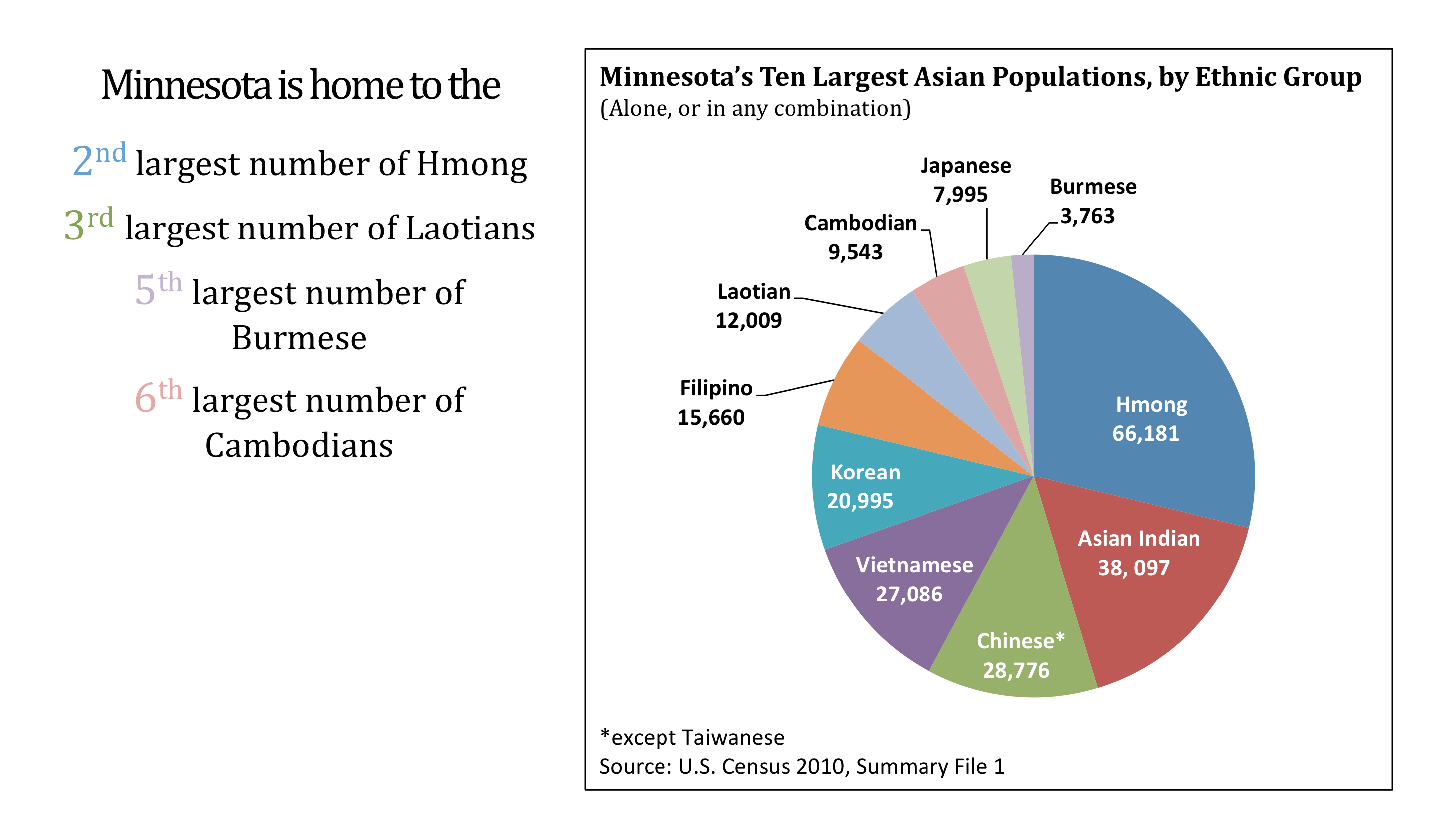
According to the 2010 U.S. Census the eight largest Asian American populations in Minnesota are the Hmong, Asian Indian, Chinese, Vietnamese, Korean, Filipino, Laotian, and Cambodian community. Specifically, 27 percent of the total population identify themselves as Hmong, 15.5 percent are Asian Indian, 11.7 percent are Chinese, 11.1 percent are Vietnamese, 4.9 percent are Laotians, and 3.9 percent are Cambodians (See Figure 2).

Minnesota is home to over 40 different Asian Pacific Minnesotan immigrant and refugee communities. Each community has its own strengths and challenges that may be unique to that ethnic community. The following is an overview of how the Laotian community is faring in Minnesota.

Following a similar path as other AAPI refugees displaced by the Vietnam War, the Laotian community arrived in Minnesota in the late 1970s and 1980s to rebuild their lives.[i] Approximately 12,000 Laotians live in mostly urban counties in the Twin Cities and earn a median income of $40,000, which is the lowest income range among all eight AAPI ethnic communities. Laotian Americans have high unemployment rates at 12.7 percent. Over 40 percent of the Laotian population earned less than a high school diploma.i  APA ComMNet REACH CORE project staff and volunteers met with Laotian American community members and leaders throughout the Twin Cities to understand the community’s strengths, challenges and other social and environmental factors affecting its overall health and wellbeing.

chart

Laotian American Community Strengths

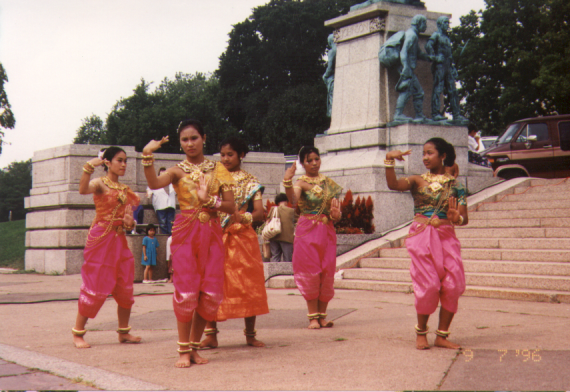
dance

Laotian Americans who participated in this project stated that their strong family and community connections are important in improving the health and wellbeing of their community. Family members rely on each other for support and often visit with one another to talk about issues affecting their family or community. Sunny Chanthanouvong, Executive Director of the Lao Assistance Center, stated in his key informant interview that health information is usually spread using family and community network. Knowledge about diseases and preventive health practices are often communicated through storytelling and discussions during small get-togethers or at large community events. “We talk about sickness and health, we talk about the need for people to get exercise and eat healthy,” said Sunny Chanthanouvong who added that good as well as bad experiences of community members when dealing with health issues are often shared with one another.

Laotian American Community Challenges

Laotian Americans indicated that many in their community live in distressed neighborhoods and physical exercise as well as healthy eating habits may sometimes be difficult for members of the community. Due to their relatively recent introduction to the American health care system, some Laotian Americans may not be familiar with preventive practices to deter diseases or how certain disease can spread through different channels. Sunny Chanthanouvong explained how his organization attempts to educate Laotian Americans on flu prevention.

speehc

“It’s very important to help the community to truly understand the concept – where it’s coming from. People say that you have to save money for retirement, but what does that really mean? When there’s flu going around, they tell us, wash your hands to keep flu away but they still shake hands with someone who is sick. There is something behind just washing the hands, you have to tell the purpose for it, it’s not going to help much…we need deeper education.”

– Sunny Chanthanouvong, Executive Director of the Lao Assistance Center on educating the Lao American community about infectious diseases

In addition, APA ComMNet Health survey results show that the Laotian American community exhibited high tobacco use with nearly 30 percent of Laotian Americans stating that they frequently smoked cigarettes (Figure 3). Anecdotally, Laotian Americans also indicated that alcohol use was prevalent in the community especially during family and community celebrations despite the lack of evidence from this study affirming this notion. Laotian Americans added that smoking and drinking are common practices in Laos and young Laotian Americans who were raised in the U.S. often see their parents drink alcohol and smoke cigarettes leading many Laotian American youth to believe that such behaviors are normal and adopt their parents’ addictive habits as their own.

[i] Minnesota Historical Society, 2013. “Becoming Minnesotan: Stories of Recent Immigrants and Refugees.” St. Paul, MN: Minnesota Historical Society. Retrieved January 8, 2013 (http://education.mnhs.org/immigration/)


Holiday Eating

It is that time of the year again! We all will stuff ourselves on Thanksgiving and Christmas because we all love food. But there are some ways to avoid becoming stuffed turkeys ourselves. Becoming unhealthy after holidays is not the best outcome. It’s all about that balance between your eating habits and your life style choices.

So here are some things to remember when you are enjoying the holiday:

1. Eat a little bit of everything. Although there will be very great food provided, it is best to sample everything you like. Instead of eating a lot of some food, try to enjoy bits and bits from here to there. It’ll give you more chances to try varieties of delicious dishes.

2. Eat a bit now, a bit later; the point is to enjoy the foods. Along with the first tip, enjoy a dish now, enjoy another later. The food won’t run away so take your time. It’ll make you appreciate their flavors and tastes more.

3. Balance out your diet. We all have our guilty pleasure foods such as sweets or friend foods. We can enjoy those of course and no one will blame us. But it doesn’t hurt to eat some fruits and vegetables too. It does help a little to ease your cravings.

4. Drink lots of water! Try to avoid sugary and calories filled drinks because that’s where most of your calories will come from. So let’s not waste them on pop and sugary drinks, but instead yummy foods!

5. Dress comfortably. You may want to have more space to expand your tummy and relax. So dress in clothes that will allow you to stretch because the last thing we want to struggle with is fussing with our tight clothes.

All in all, enjoy your holidays and eat well! Happy holidays!

Vietnamese Americans

According to the 2010 U.S. Census the eight largest Asian American populations in Minnesota are the Hmong, Asian Indian, Chinese, Vietnamese, Korean, Filipino, Laotian, and Cambodian communities. Specifically, 27 percent of the total population identify themselves as Hmong, 15.5 percent are Asian Indian, 11.7 percent are Chinese, 11.1 percent are Vietnamese, 4.9 percent are Laotians, and 3.9 percent are Cambodians (See Figure 2).[i]

Minnesota is home to over 40 different Asian Pacific Minnesotan immigrant and refugee communities. Each community has its own strengths and challenges that may be unique to that ethnic community. The following is an overview of how the Vietnamese American community is faring in Minnesota.
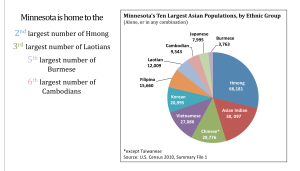
chart

Vietnamese American Community Overview

The Vietnamese were among the first Asian refugees to arrive in Minnesota after the “fall of Saigon” in 1975 and was considered one of the fastest growing AAPI ethnic groups in the state. [ii] In fact it was the 2nd largest AAPI ethnic community in 2000. Although the community grew at a rate of 31.7 percent in the last decade, it is now the fourth largest AAPI community in Minnesota.i   Similar to the Chinese and Taiwanese community, Vietnamese Americans traditionally opened their own businesses and have helped Minnesota’s economy prosper in the past three decades. The median income of a Vietnamese household in Minnesota is $60,767.i   APA ComMNet REACH CORE project staff and volunteers met with Vietnamese American community members and leaders throughout the Twin Cities to understand the community’s strengths, challenges and other social and environmental factors affecting its overall health and wellbeing.

Vietnamese American Community Strengths

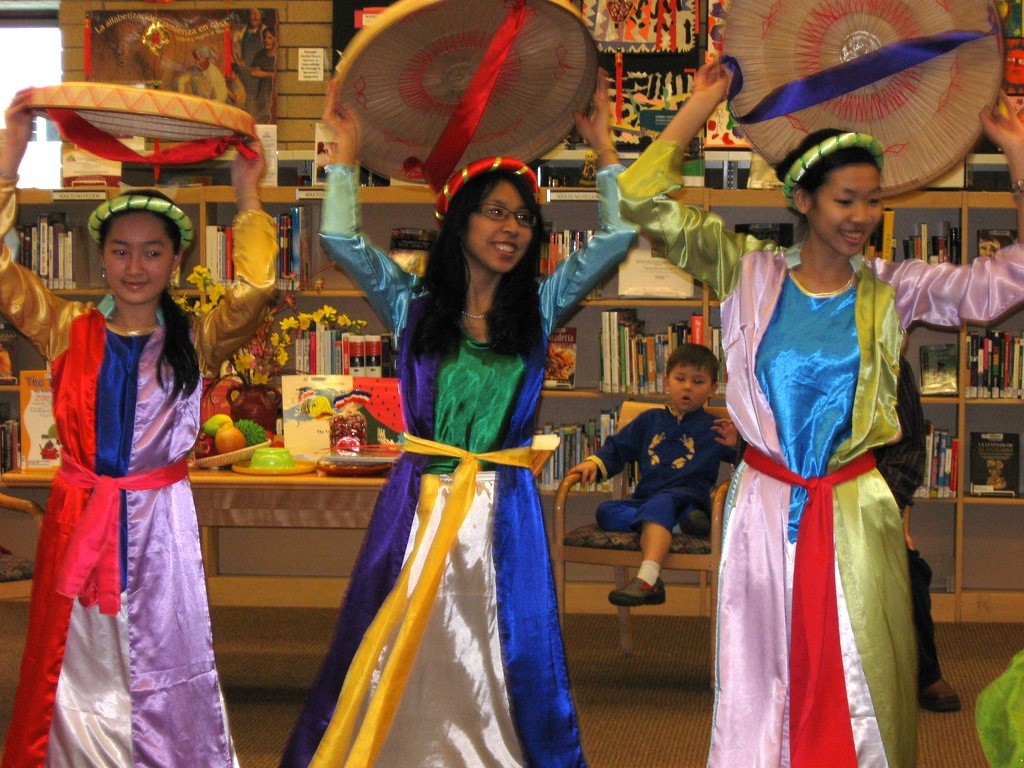
dance

While qualitative results show that the Vietnamese American community faces numerous challenges that negatively affect their wellbeing, many in the community stated that they had excellent or very good general health. In fact, more than any other AAPI ethnic group, the Vietnamese American respondents perceived their general health as excellent See Figure 4. APA ComMNet survey results also show that the Vietnamese American community regularly visit with their physician, do regular physical activity such as walking or gardening and are physically healthy with 76.1 percent of the population within the normal Body Mass Index (BMI) range for Asian Americans (Figure 3).

Vietnamese American community members interviewed for this study pointed to their traditional diet of fresh vegetables, fruits and small amounts of meat as the reason for their good health.

Vietnamese American Community Challenges

Similar to other AAPI communities, the Vietnamese community identified the lack of culturally and linguistically appropriate resources and services for their limited English-speaking members, access to affordable health care and lack of transportation as negatively influencing their quality of life. Guests during the Vietnamese radio show outlined key issues they felt were important in their community:

“Point 1: Many immigrants and seniors have low educational level in addition to the language barrier they face when trying to communicate with doctors and health care providers.

Point 2: The lack of transportation prevents Vietnamese seniors from accessing their health care provider even if they have health coverage.

Point 3: Those who do have health insurance may not be using it because they view health care as necessary when they are sick.”
discussion

Compared to other AAPI ethnic groups, the Vietnamese American community was found to use tobacco relatively heavily with a little over 10 percent of the respondents saying that they smoke some days but not everyday. While the community health survey produced different results, anecdotal evidence suggests that the Vietnamese community has high smoking rates, especially among the younger population. In addition, the community also has a higher prevalence of hypertension at 26 percent.  Suggestions from community members for improving conditions to improve Vietnamese Americans’ quality of life includes free or low-cost clinics and health insurance, increased interpretation services, and the development of health education materials, such as flyers, brochures and media products, in the Vietnamese languages.

References:

[i] Council of Asian-Pacific Minnesotans (CAPMN), 2012. The State of Asian Pacific Minnesotans: 2010 Census and 2008-2010 American Community Survey Report. St. Paul, MN. Published by the Council of Asian Pacific Minnesotans.

[ii] Minnesota Historical Society, 2013. “Becoming Minnesotan: Stories of Recent Immigrants and Refugees.” St. Paul, MN: Minnesota Historical Society. Retrieved January 8, 2013 (http://education.mnhs.org/immigration/)



Sparking a Generation of Drug-Free Youth‏

There are many things we can do to make the world a better place. One of them is to prevent youths from drug use and substance abuse. It is a parent’s concern as well as society’s problem because it does affect everyone.

According to www.cdc.gov, in the U.S. 66.2% of teens has had at least one drink of alcohol in their life. It is not surprising because teens are influenced by peer pressures and social expectations. About 40.7% of teens had use marijuana once or more during their life. This statistic could be so high due to the fact that many people perceived marijuana as ‘safe’ to use. Also, 22.1% of teens has been offered, sold, or given illegal drugs on school property. Drug and substance use for many people and teens are easy way out of situations like dealing with stress, making a reputation, developing their image, trying to find their place in life, etc.

pastyearvariousdrugshttp://www.drugabuse.gov

Most of the time drugs, alcohol, tobacco, etc., are not sought out by teens, but they receive or are introduced to them through a friend or a family member. It is those connections that we can’t stop because it is up to the individuals to accept or decline the offer. It is not about whether what is safer to use and what are the ‘acceptable’ risks. What we want is to prevent any possible harm that come onto the user’s health and others as well.

Bicultural Healthy Living Poster

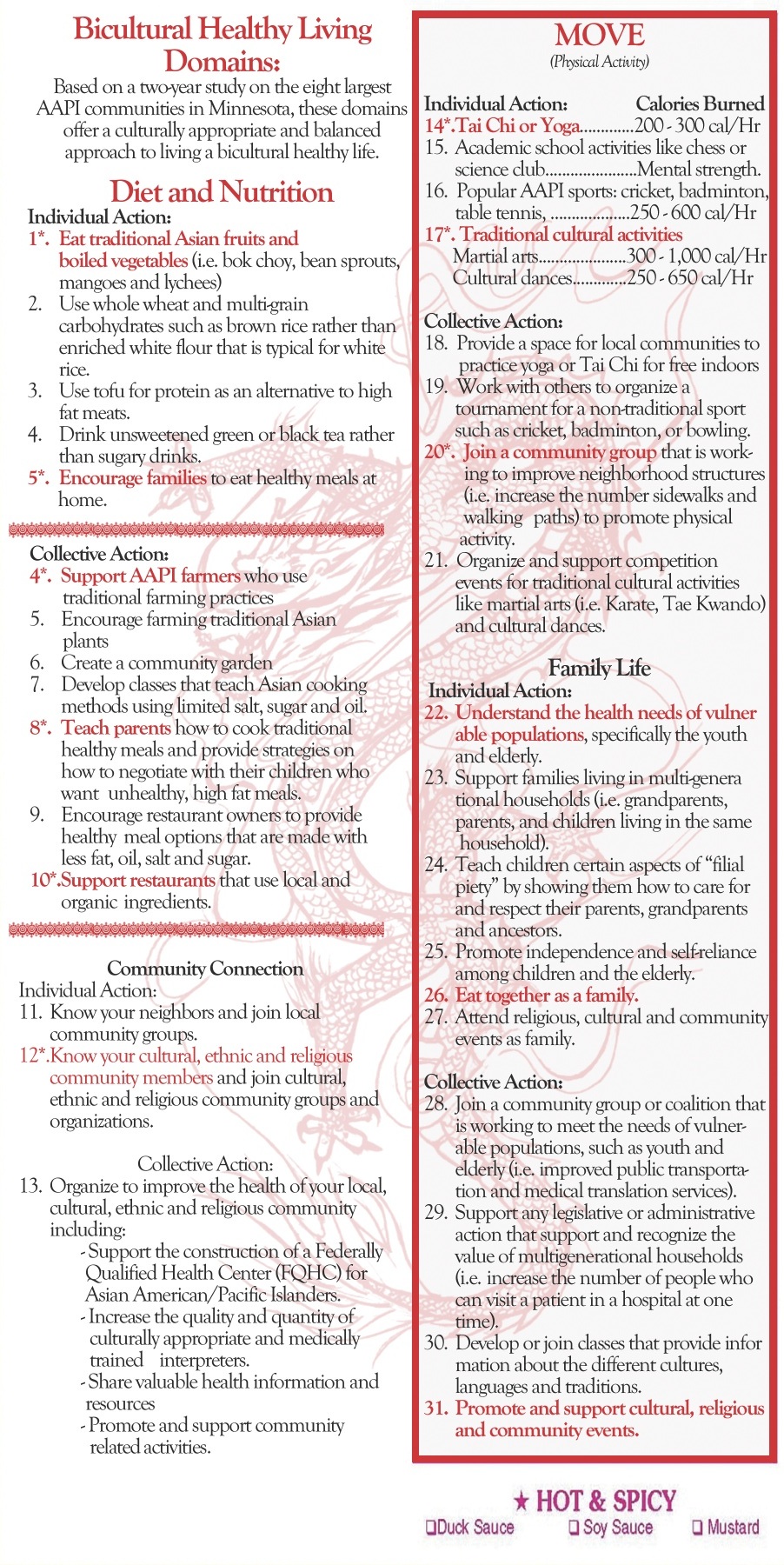
Living biculturally is about having balancing in your life, family, diet, health, and friends. There are many great things one can incorporate in their daily lives that compasses more than one culture. Here is a fun poster on possibly things to do:

PPO3_BiculturalHealthyLiv_Poster_MidSection

Here are other tips to outreach in other ethnic cultural groups/communities:

1. Meet international students!

If you’re a student or is housing a international student or know someone from another country, take the time to get to know them better. You will better understand their background, the culture, and the world they live in. Not only will it allow you to hear from a person’s firsthand experience, you’ll get better information than reading and finding them on your own.

2. Be part of different communities!

Participate in festivals, holidays, and other activities in different ethnic communities. It will provide you opportunities to expand your network and let you enjoy the different kinds of celebrations/activities a culture can offer.

3. Learn about your own culture!

You may not know much about your own culture and there may be many things you didn’t know before. So before expanding out to other cultures or if you don’t know where to start, think about your own culture(s). Try to get involved in your culture(s) through families and friends. Eventually, you’ll find something about your background that you’ll enjoy.


Important Proverbs We Should All Live By

According to www.yourdictionary.com/proverb, “the definition of a proverb is a short saying that is widely used to express an obvious truth”.

So why exactly are proverbs important to know? Well, they influence the way people interact with one another and the way we could perceive different situations. Often, they teach us important values in terms of respect, acceptance, love, responsibility, and more. Proverbs can teach us different aspects of many cultures and give us insights how people used to thought in the past. So here is a collection of proverbs from all kinds of cultures!

1. Korea : “A picture of a rice cake.”

In the Korean culture, rice cakes are loved by many people. If there’s only a picture of rice cakes, they can’t literally eat it. So the meaning behind this proverb is that you shouldn’t develop a desire that you cannot have.

2. China: “Do not do to others what you don’t want done to yourself.”

In Chinese cultures, there is an important emphasize of being a good nature person. That means that you wouldn’t want to do anything that would disrespect, harm, or possibly affect someone in a negative way because you wouldn’t want them to happen to you too. So treat people like how you want to be treated.

3. Vietnamese: “Ghosts have no pity on the sickly. Robbers have no pity for the poor.”

Life is about experiencing ups and down. It won’t be a smooth sail and expect to have good and bad situations because you can’t predict the uncertainly of what life may offer  you.

4. Thai: “As diligent as an ant.”

Thai people can see how little ants are and recognize that they work very hard. That is why even if it is hard work, be determined to carry out your responsibility.

5. Japan: “If you do not enter the tiger’s cave, you will not catch its cub.”

You can’ expect life to give you everything. Sometimes, it is up to you to take the initial step. So if you don’t risk trying, you will not get what you want.

6. Filipino: “A monkey dressed up is still a monkey.”

You can change your outer appearances and what you wear, but you are still who you are. It takes more than that to change yourself.


Eat & Cater Your Own Healthy Diet

There’s a saying that “you are what you eat”. Often time, people don’t realize that part of being healthy is eating healthy and it is in our human nature to want to eat yummy delicious food. Unhealthy food that are fried, loaded with fat, sodium, and have too much sugar can cause you to feel sick inside and out. That is why it isn’t ideal to eat out often or eat junk food on a daily basis because it does affect your health. Also, eating a limited range of foods doesn’t give you proper nutrients, it can contribute to obesity, and body related diseases. So it is up to you to determine how your body can become more healthy or unhealthy. It doesn’t take much, but for you to realize what you’re putting in your body.

Tip 1: Cook your own food. Even if your food isn’t organic, you can wash it multiple times and cook it properly. Also, you know what you’re eating, how much you’re consuming, and what you put in it. So you would know what’s in it compared to eating something that was prepared unseen.

Tip 2: Balance your eating habits. It’s ideal to have at least 3 proper meals a day, but eating snacks in between breakfast, lunch, and dinner can actually benefit you. It’s because you won’t feel the need to eat more when you’re less hungry and your body will crave less. You may consume more calories here and there, but remember these are snacks, not a small meal. So just be careful of what you are snacking on.

Tip 3: Have varieties in your dishes. This means that keep your diet full of different fruits, veggies, carbs, proteins, and such. If you’re stuck on a certain carb like bread or rice, make sure to mix it up and add some color. You’ll enjoy eating something more with colors and textures.

Tip 4: Cut down on eating junk food. We all have some cravings at some point, but we can always try to decrease having them slowly. If you’re eating a donut today, maybe wait another 3 or 4 days to indulge again. It’s all about that balance you want to find and keep up.

Top 5: Drink water most of the time. If not, all the time. We all know pop, juices, mochas, frappes, and those other drinks have high levels of sugar. We can have them once in a while, but the body doesn’t need all that unhealthy sugar. Water can promote better circulation of fluids in the body as well as keep you hydrated throughout the day. Remember that our body does contain 50-60% of water. That’s a lot of water require to make your body function properly.