
5 Tough Questions to Ask Aging Parents

See Mou, wife of Robert Lor (not pictured), carries a basket full of ripe tomatoes on their rented land north of Stillwater. (Pioneer Press: Ben Garvin)

See Mou, wife of Robert Lor (not pictured), carries a basket full of ripe tomatoes on their rented land north of Stillwater.
(Pioneer Press: Ben Garvin)

The financial well-being and long-term care needs of aging parents can be among the most sensitive, difficult issues for families to discuss. The Minnesota Department of Commerce is encouraging Minnesotans to take the time to talk with their loved ones this holiday season about their financial commitments and long-term care wishes.

1. Do you have any serious health issues?

Openly discuss with your parents any chronic illnesses or conditions that require recurring treatment. Request a list of medications and doctors’ contact information. If a parent has a history of prolonged physical illness or disability, you may want to research long-term care options.

2. What is your financial situation?

If an elderly parent’s health suddenly takes a negative turn, out-of-pocket expenses can add up quickly. Discuss all sources of income and insurance coverage to determine how and if your parent might cover unanticipated medical treatment. If your parents agree, familiarize yourself with their insurance coverage and financial assets such as savings, pension plans, stocks, IRAs and 401K plans. Income, assets and insurance affect Medicaid eligibility and Medicare options.

3. Where would you prefer to live if you could no longer care for yourself?

Is your parent comfortable with the prospect of living in a nursing home, or does he or she have plans to move in with a family member or friend should special care be required? Be open and direct about your ability to honor these wishes. If your parents need nursing home care, it’s important to know if their monthly income meets state eligibility requirements for Medicaid.

4. Who do you trust to make decisions for you should you become incapacitated?

Encourage your parent to officially ask someone to serve as his or her medical and financial proxy or power of attorney. It is best if your parent chooses someone to trust with making their financial decisions, and if that is possible, there is agreement within the family about who is being entrusted with these responsibilities. It is also important for this person to maintain clear communication with family members.

5. What are your end-of-life wishes?

Individual feelings vary regarding the prospect of having one’s life prolonged by the use of medical equipment and medication. Know your parents’ views, and make sure their preferences are recorded in an official document such as a living will or advanced health care directive long before they no longer are capable of expressing informed consent.

Rightful credits belong to rightful owners. For info, click here.

November is National Diabetes Month

livingwithdiabetes_456v2px

It’s Your Life. Treat Your Diabetes Well.

http://www.cdc.gov/

“November is National Diabetes Month, and the City of Minneapolis wants to help prevent diabetes by encouraging people to get screened for Type 2 diabetes and then take action if they’re at risk for developing it.

The Minnesota Department of Health estimates that one out of three Minnesotans have prediabetes, but most of them don’t know it. People with prediabetes are likely to develop Type 2 diabetes within five years if they don’t take action.” – http://www.minneapolismn.gov/

The Minneapolis Health Department, with funding from the Minnesota Department of Health and the Centers for Disease Control and Prevention sponsors the prevention program for Minneapolis residents in four community clinics and one community organization.

Under the guidance of a trained coach over 16 weeks, participants learn healthy eating, physical activity, managing stress, staying motivated, and solving problems that can get in the way of making healthy changes.

New classes are forming now. For more information, people can go to www.minneapolismn.gov/health/living/diabetesor call a class provider directly:

  • Native American Community Clinic (Brian Joyce at 612-872-8086 x1041).
  • Hennepin County Medical Center (Pa Xiong at 612-873-6641).
  • Neighborhood HealthSource clinics (Julie Lor at 612-287-2447).
  • Stairstep Foundation (Sylvia Amos at 612-521-3110).

For more information about the National Diabetes Prevention Program, go to www.cdc.gov/diabetes/prevention/index.htm.  Credits belong to the rightful owner.

Today is #WorldStrokeDay!

ginormous

www.strokeassociation.org

Today highlights the importance and awareness of stroke. By being more knowledge in what stroke is, we can better understand how it affects people afflicted with stroke. According to http://powertoendstroke.org/, “stroke is a type of cardiovascular disease. It affects the arteries leading to and within the brain. A stroke occurs when a blood vessel that carries oxygen and nutrients to the brain is either blocked by a clot or bursts. When that happens, part of the brain cannot get the blood (and oxygen) it needs, so it starts to die.” What can you to spread the knowledge:

  • Share, tweet, and tell your friends about #WorldStrokeDay
  • Tell Congress that stroke survivors on Medicare deserve better. If Congress does not act before next spring, stroke patients on Medicare will face limits on the outpatient therapy needed to regain vital skills, like walking and talking. The typical Medicare beneficiary has a $1,900 therapy cap. On average, that amounts to a single evaluation and just 19 outpatient therapy sessions. However, stroke survivors often need 3-5 therapy sessions a week, which means they’d reach the caps in less than two months. We must do better for these survivors! Tell Congress to remove this harmful cap on stroke patients once-and-for-all! (http://www.strokeassociation.org/)
  • Symptoms include sudden numbness, severe headaches, and troubles with walking, and seeing. The faster you call for help, the quicker it can be helped!
    • If you think someone may be having a stroke, act F.A.S.T.1 and do the following simple test:F—Face: Ask the person to smile. Does one side of the face droop?
      A—Arms:
      Ask the person to raise both arms. Does one arm drift downward?
      S—Speech:
      Ask the person to repeat a simple phrase. Is their speech slurred or strange?
      T—Time:
      If you observe any of these signs, call 9-1-1 immediately.

Here are some quick facts about stroke (www.cdc.gov):

  • Stroke kills almost 130,000 Americans each year—that’s 1 out of every 20 deaths.
  • Stroke is a leading cause of serious long-term disability.
  • On average, one American dies from stroke every 4 minutes.
  • In 2009, 34% of people hospitalized for stroke were younger than 65 years.
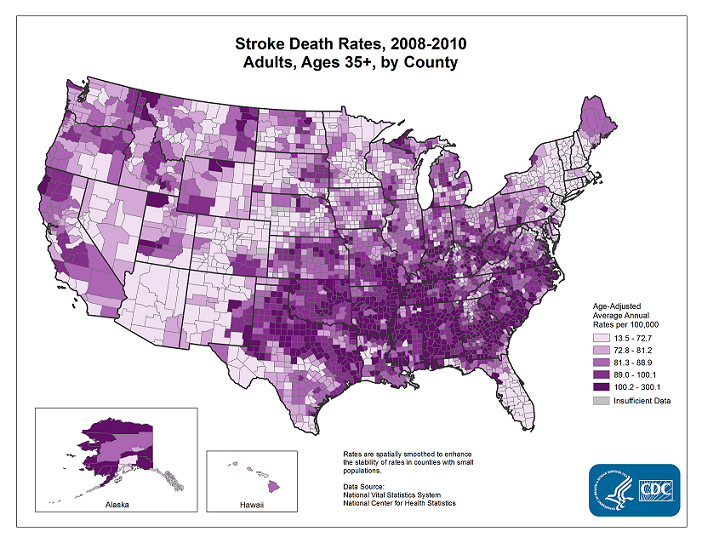
  • The country’s highest death rates from stroke are in the southeastern United States.2 Below is a map showing the prevalence of stroke across the United States.

stroke_death_rates

Credits belong to rightful owners.

Walk to School Day, Oct 7th!

“International Walk to School Day is a global event that involves communities from more than 40 countries walking and biking to school on the same day. It began in 1997 as a one-day event. Over time, this event has become part of a movement for year-round safe routes to school and a celebration – with record breaking participation – each October. Today, thousands of schools across America – from all 50 states, the District of Columbia, and Puerto Rico – participate every October.” – http://walkbiketoschool.org/

WTSD_6inch_Color

www.walkbiketoschool.org

This event occurs each year and serves to remind everyone to live a healthier life. Walking can be exercise too if you do it enough! “Walking briskly for 2 hours and 30 minutes each week— easily broken up into 5, 30-minute walks—helps you meet the Physical Activity Guidelines and gain health benefits.” (http://www.cdc.gov/). If you don’t enjoy running or intense exercise, this is another option. Encourage your community to start walking more often by:

  • Walking with friends and family! It is a great way to spend time and exercise together.
  • Walking outside allows you to be part of the community because you are interacting with environment and people around you. The more people that are outside, the more it will encourage other people to come out.
  • Try to walk to your destinations as often as possible. If it’s close enough, take your time to walk there. Not only will it help you exercise, but help you save transportation money.

October 6: Join Us on Twitter for a Chat on Breast Cancer Awareness‏

October is Breast Cancer Awareness Month. Join the conversation on Twitter this Tuesday October 6th at 1 PM (ET). We’ll be discussing prevention, warning signs and more. The chat will be in English and Spanish.

Join @USAgov on October 6 for a chat on Breast Cancer Awareness

Follow the hashtag #SaludTues to submit questions in advance or join the conversation on Tuesday. You can also follow these Twitter accounts for more information: @USAgov@GobiernoUSA, @FDAWomen @FDAenEspanol and @SaludToday.

Credits belong to rightful owners.

MN’s Obesity Rate Rises

KSIiqJDAwolFwGLVfV2gXWCN9LnvFsfmwvME3DxwNtEmStTiS_4YysUN6BaZHfv2Hw8gJA3eCCrkpcXudGRjtk-Sv5y_4onW6l81mihNLS1YisPIZCUpko_TTKorxMI24PYhnhQ5kVFna6vS84dXBW9smT9RmGJv52fd1OsYARIs

“MINNEAPOLIS (WCCO) — Obesity rates across the country are still high despite the billions of dollars being spent on programs aimed at lowering than number, according to a new report from the Centers for Disease Control.

Minnesota is one of only five states that saw an increase in adult obesity rates last year – just shy of 28 percent.

Despite the rise, Minnesota’s rate is the 15th lowest in the U.S.

Overall, more than two-thirds of U.S. adults are either overweight or obese.

The average American today is 24 pounds heavier than his or her counterpart in 1960.” – http://minnesota.cbslocal.com/

Obesity is a real health issue arising in Minnesota. Sometimes, it is about the choices of a unhealthy lifestyle that affects people’s. So what can we do as a community to lower the rates of obesity?

  • Encourage your family, friends, and community to exercise! Whether it’s a daily or once a week, it is much better for your health than not being physical at all.
  • Buy groceries and foods from your local farmers and markets! There are actual organic and affordable food on the market. One just have to research a little bit to get information on where to get healthier food alternatives.
  • Stray away from fast food as much as possible. Although they’re cheap, fast, and easy to get, fast foods have more fat and sodium than you need on a daily basis. You can try to reduce the amount you eat fast food as you go on.
  • Join community marathons! These opportunities are a great way to exercise, support organizations, and meet new people. You will learn that there are many people out there who share the same cause as you do.
  • Living healthy is making smart choices! Being obese is a physical struggle and a mental challenge. Anyone can be healthier just by making healthier choices. It is always hard in the beginning, but once you make it a habit to life it won’t seem as difficult as before.

The Truth About Restaurant Food‏ & Eating Out Tips

QLZ72ua6tLXMXVZ8MVtr-dXnHe-sbpwUe0ajIk4w6ospwR34fBiKJRutiRJdndo8cxhsyRahxn1eDto5OPJQ1E_QfFO2wPNtLpzYpu9n4Ax2mvyKLaqD8GHYXY8yvHEBo

AMA’s STEP UP Youth 2015

Eating out can be a fun and social activity thing to do. But of course, it is not always healthy and cheap to eat out. Be aware that restaurant food can be just as unhealthy as fast food. Here are some reasons why:

  • Dishes can contain up to the same or more amount of salt, fat, and calories like fast food. Think about the total intake that comes from the appetizers, main dish, and side dishes.
  • Sometimes, it’s best to skip out on appetizers. Often time, people can’t finish their main course because they’re already full from the appetizers.
  • Are the food cleaner? This can vary from restaurants to restaurants. If you’re interested where the restaurants you eat at source their foods from, you can always ask the owner or do your own research.
  • Try not to order anything to drink besides water. Water is your body’s best friend and is an essential part of your diet. It’s free and keeps you hydrated.
  • Big plates equals big servings. Psychologically, when you have a big plate you feel like you need to fill it up with food. It relates to the old saying “your eyes can eat more than your stomach”. So it’s wise to portion your food and not over eat.

National Childhood Obesity Awareness Month and Fruits & Veggies

“One in 3 children in the United States is overweight or obese. Childhood obesity puts kids at risk for health problems that were once seen only in adults, like type 2 diabetes, high blood pressure, and heart disease.” – http://healthfinder.gov/
Post13Blog3
Children obesity is a real problem and still exist. There are reasons why obesity is still common in the U.S. Such as organic and healthy food tend to be more expensive so lower income families tend to buy lower quality food. Fast food and high calorie snacks are very cheap to buy and widely available everywhere. And many people are still not informed or knowledgeable on how food can affect their health. As much as it is a financial and informative issue, it is also a mental struggle. People have to change the way they think about food within themselves, their family, their friends, and so on.
But no worries, obesity can be prevented! September is the National Childhood Obesity Awareness Month and organizations hope to spread the word of helping others! Here are so helpful resources that you can use and please share with others on social media:
National Childhood Obesity Awareness Month
Fruits and Veggies – More Matters Month

Effective Cross-Cultural Communication and Health Literacy

Post10Blog5 copy

Communicating effectively across cultures is important for public health professionals. People’s ideas about health and illness can vary by cultural group and sub-group, and can affect which health literacy skills are considered culturally necessary. When communicating with diverse cultural groups, public health professionals should be aware of and adjust for linguistic differences, beliefs, values, customs, and behaviors that can affect if the audience receives your intended message.

Here are some tips to make sure you and your materials are well understood:

  • Try not to treat culture as a negative or barrier that must be overcome. Your cultural background may not be the same as your audience’s, but you can learn about and adjust for language, beliefs, and customs as you would for other factors, such as age or gender, that might affect how the audience interprets the messages. 
  • If your messages aren’t in the audience’s preferred language, consider if interpretation of oral information, translation of written materials, or a complete redesign to address cultural differences is necessary.
  • Adapt messages and materials for the literacy and numeracy skills people have in their preferred language.
  • Refer to the National Culturally and Linguistically Appropriate Services (CLAS) Standards as you plan your communication strategy.

To read more about the role of culture in health literacy, please visit http://www.cdc.gov/healthliteracy/culture.html

Stay Motivated in School

thumb-a8209f87

www.annarborfamily.com

Many students return to school with new motivation, but it is quite hard to maintain it! Sometimes, you just want to give up because many things can affect you. But don’t worry, you’re not alone as many other students are going through the same problems. These tips will help you get through the year!

  1. To feel good and energized, you need at least 8 hours of sleep! If your body is on a stable sleeping cycle, you will fall asleep much quicker. You’ll find that you will feel better the next morning as you won’t wake up exhausted.
  2. Eat a balance meal with healthy snacks. It’s normal for students of all ages to feel constantly feel hunger throughout the day. Chances are you may be tired, didn’t get to eat a proper meal, or too busy to worry about eating right. But you can try to avoid unhealthy snacks and meals. Try to bring healthy alternatives to satisfy your cravings!
  3. Along with eating well, try to live a balance life. That means make time for your education, family, friends, exercising, and free time. It will assure you more freedom to do what you need and want. So having a planner and being organized helps out a lot!
  4. Ask questions in class! You probably don’t want to stand out or feel less smart than other students in class, but chances are other students are wondering the same. It’s all about trying to educate yourself without worrying what others may think of you.
  5. Build positive relationships with peers and teachers! The closer you are with the people around you, you all can help and educate each other. Also, they provide new perspectives and knowledge that you may not know or have.
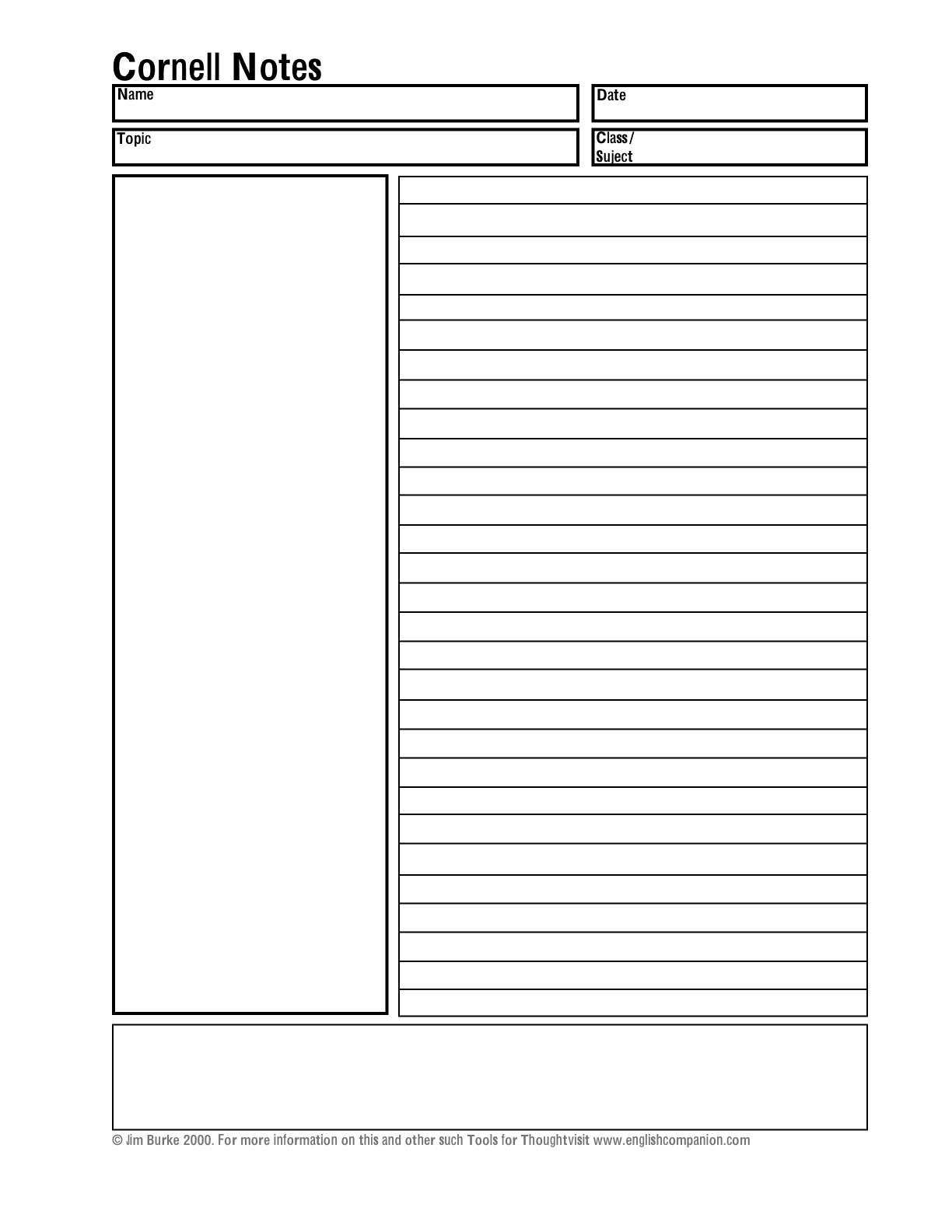
  6. Take effective notes! Everyone has their own styles when it comes to note taking. But don’t relentlessly write down notes without proper organization . You won’t be able to find things easily when you need them to study. A popular note taking style is Cornell notes.

cornell-notes-template-6ks06fha

Picture credit linked here.