Making Future Decisions

Week2Blog3

Are you wondering what is your next goal or step to take at the moment? Well, making an decision can help you in ways that could be either or both positive and negative. But don’t worry too much because every choice you make should reflect what you want/need at the moment. It doesn’t mean you’ll always get what you want, but you will at least the after effect of your decision. Here are some advises on how to make your future decisions:

1. Weigh the outcome. If you are looking for a result, make sure you are aware of any consequences. Are there going to be more positive than negative results? Or otherwise? Sometimes, some decisions requires you to think more deeper.

2. Who is going to be affected? Sometimes your decisions may not just affect you, but other around you as well. Such as friends, family, teachers, and more. So if it’s going to be about yourself it would be easier, but it involves many people than go to 3.

3. Talk to others about it. If it’s a hard decision that may affect others, it is probably best to hear about other people’s perspective that you value. They could influence to make better choices or help you avoid making mistakes.

4. How will it change you? So will your choice give you the opportunity/chance that you are looking for? Is it to change, to deliver, to make new friends, to get a better grade, or become a better athlete? You may want to think about the different outcomes of how your decision in different ways.

5. Be true to you. Remember that at the end of the day, your decision should reflect who you are as person. Don’t make a choice that you wouldn’t want to do. It will never be the way that you want it to be or have a good outcome. So think about what you want and how you would it to be like.

A Cup of Tea

Week2Blog5

Grab a cup of tea now because its health benefits can only do you good. Many places in the world like in Asia, Europe, and more drinks tea on a daily basis. It’s popularity has continued to rise with more research showing that tea can help your body be healthier. Tea originated in China and has come such a long way from ancient times to now that there  are about 1,500 kinds of tea. There are so many that you are guarantee to find flavors suited to your taste.

So what are some benefits by drinking tea?

  • Fight against different types of cancer
  • Protect organs
  • Lower cholesterol
  • Be a weight losing supplement
  • Hydrate the body
  • Fight against cardiovascular diseases
  • Body degradation – skins, bones

Some recommended tea to try is:

  • Green tea
  • Black tea
  • Oolong Tea
  • White Tea
  • Jasmine Tea

Tea on its own is a either dried leaves or a blend of herbs/flowers/spices. There is a wide range of flavors and taste from bland to citrus to bitter. You can always make add other ingredients into your tea that will help you drink it.


Exercising Differently

Exercising can be a difficult thing to do. Not everyone particularly enjoy it or can develop a habit of working out. It is hard because there may be not enough time, motivation, and everyone’s body is different, etc. But if you’re struggling to decide who you can be active, here are a few tips what to do.

1. Yoga

Yoga has been long known to be great for the body and mind. It can help relax the body in ways that releases stress, increases flexibility, and usage of different body muscles. The best part is that anyone from beginner to expert can learn, even together. Yoga ranges from different types such as hot to spiritual to healing and more.

2. Eating clean(er)

If you can’t work out first, then start being healthier by eating cleaner. Eating habits are challenging because we are so used to eating what we want. Not only this can help with self discipline, but improve your overall health. Recommended foods that should be cut or consume less is processed and fast food. Those are often filled with unhealthy fat, sugar, and oil. Try to eat fresh (better if also organic) produces or simply cook your own dishes. This way you can control how much you eat and know what you are putting in your body.

3. Tai Chi

Tai Chi is a type of Chinese martial art that has been practiced by many different kinds of people for a long period of time. In today’s world, it is still practice for its healthy benefits. It can help the body (and mind) meditate, condition, flexibility, and strength. Many believe that by practicing Tai Chi can help lengthen the life of people. This form of exercise is great for beginners to start out with something simple and easy to learn.

4. Become part of a group!

If you dislike being active alone, join a group/club that requires you to be active. Dance groups, outdoor cleaning programs, garden clubs, sport teams, and even participation in social events will allow you to be active with other people. You can become more encouraged and motivated to be active by being socially engaged. Just make sure to find the right one for you.


Eating Traditional is Healthy!

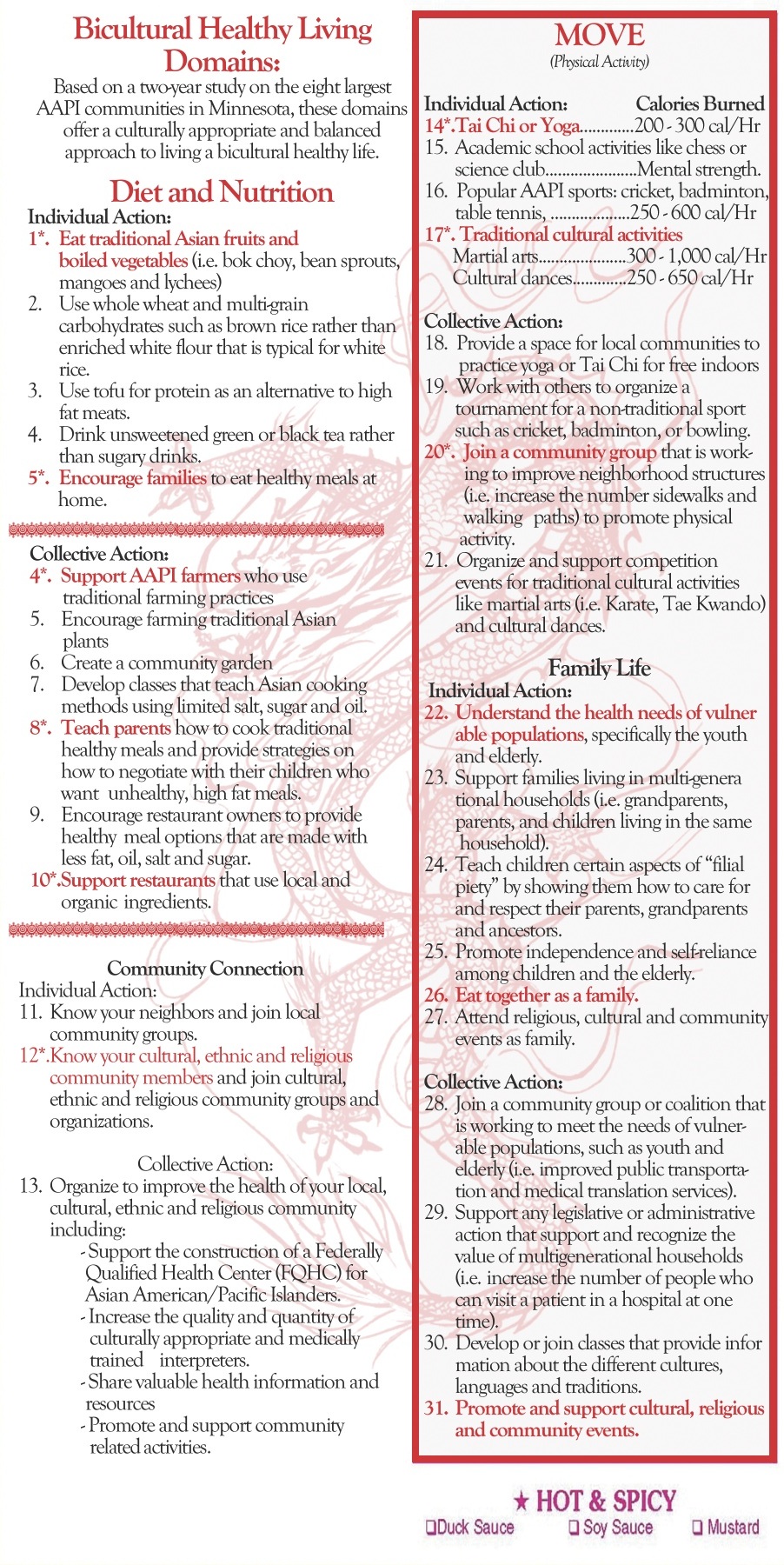
Asian Americans who grew up in the U.S. have been influenced over their lifetime of how to eat healthy. The American diet is shown in a food pyramid that doesn’t really represent or incorporate foods from other cultures. Many people choose to mix in both diet and switch other things. But did you know that many Asian cultures actually have a healthy diet too? Here’s an example of what many Asian foods consist of.

health asian food

So what are the main differences between the two diets?

1. One difference between Western and Eastern diet is at the bottom of the pyramid. Westerns tend to eat more grains, oats, and more. While the Eastern diet consist majorly of rice, noodles, and tofu. A great change to make in your diet is to eat 100% whole grain/wheat breads and switching from white rice to brown rice can be a healthier choice.

2. In many Asian dishes, there is usually vegetables/fruits mixed in or as side dishes. In Japan, even fruits can be seen as deserts and served to children after dinner. Western dishes don’t usually include side dishes and whenever there is some, they are usually considered a full entree plate. It’s just more common for Asians to eat vegetables and fruits on a daily basis due to the different types of cuisines and culture.

3. Some people eat meat daily, rarely, and sometimes, always. The point is that everyone eats meat differently and at a different rate. In many cultures, meat was perceived as a luxury food and only available to the middle to rich classes. But in these days, it is something that everyone can have easy access to and it has become affordable.

4. One of the biggest differences between the American diet compared to Eastern diet is that the Eastern diet consist less processed food than the American diet. It could because of culture differences since America was built upon the slogan of ‘bigger and faster things can produce, the better’. In the U.S., it is much harder to find organic or fresh produces that are not being sent of to large groceries or being very expensive. In Eastern cultures, foods are usually home cooked with organic or local produces from their markets. It could because that they do have better access to fresh produces like fruits, veggies, fishes, and more.

Understanding Substance Abuse Challenges

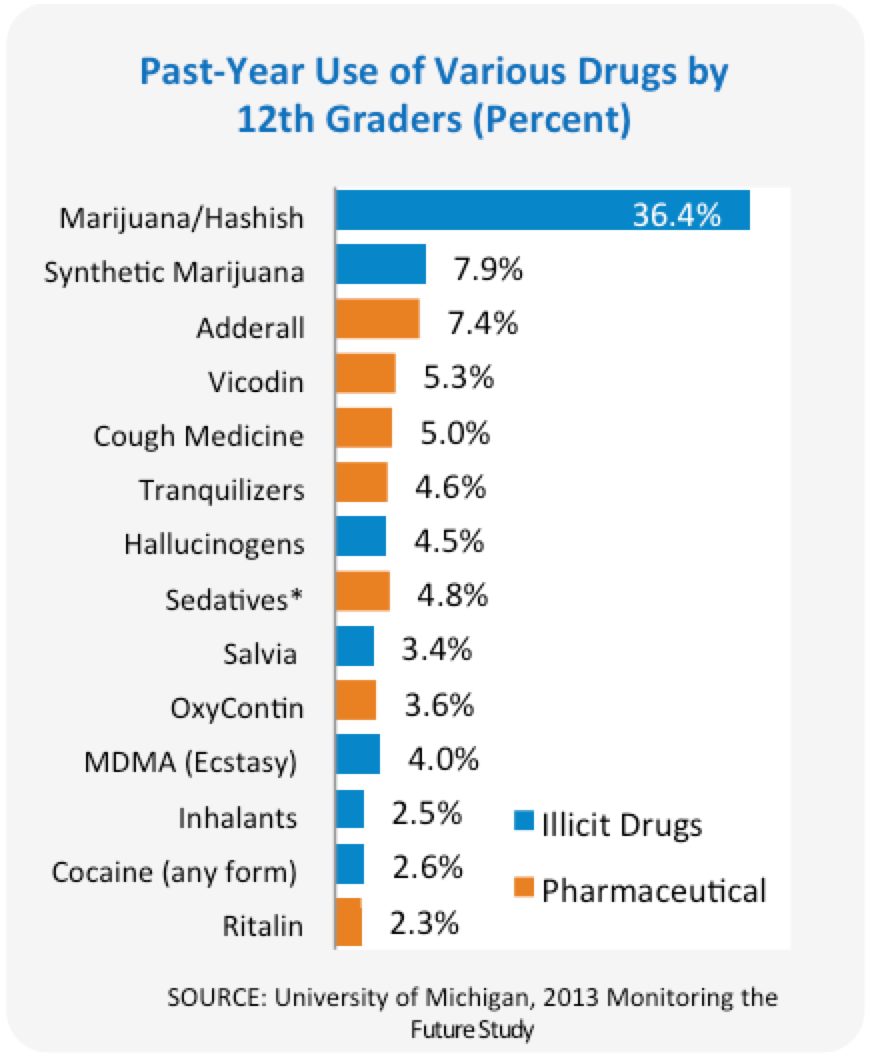
People who have gone through substance abuses are often misunderstood in many ways. Some may not understand why they do what they do or why can’t just stop. There are many different level of reasons why because everyone’s situation is different. Also, it requires other people in their lives to be understanding without being judgmental like families and friends. If you know somebody who may be going through substance abuse challenges or yourself is going through that, here are some tips that could help you out:

Identify the problem. You can only start helping yourself or someone else in need if you properly know what they’re struggling with. By helping others/yourself to acknowledge that there is a problem is not something to be ashamed or embarrassed about. Substance abuses can increase or be results of stress, anger, addiction(s), emotional distress, unhealthy treatments, or more. Problems could lead to bigger issues and early help can prevent more negative things from occurring.

Communicate with people. Talking things out well help sort out the emotions they’re facing and you understanding their situation more. With yourself, you can talk to families, friends, or seek professional consultation. Being able to have another person’s perspective on your struggles can help you understand the situation more.

Take the step to seek for help. There are so many resources out there in the U.S. to help people face/solve their issues. In today’s world, established centers will definitely help anyone out if people reach out to them. Sometimes, it’s really up to those people or yourself to help themselves. Remember that people are willing to help you or someone you know who needs help.

Here’s a link to another credible source for extra information.

Mental Health in Youths

Mental health in youths is an important part of development and understanding the world around them. It impacts youths on how they adapt to new situations and perceive life. Different situations allows youth to develop in self improvement, morals, sense of justice, and more. Remember that it is important to take care of your psychological health because it directly impact your feelings, moods, physical body, responses, actions, and more.

According to http://www.findyouthinfo.gov/, youths that are able to develop their mental health in positive ways can help:

  • navigate successfully the complexities of life
  • develop fulfilling relationships
  • adapt to change
  • utilize appropriate coping mechanisms to achieve well-being without discrimination
  • realize their potential
  • have their needs met
  • develop skills that help them navigate the different environments they inhabit

If you are going through or know someone who may need the extra support and understanding, make sure to reach out for help. There are so many ways to help guide someone or yourself to have a healthier mentality. Another source to look at with many information about this topic is here.

Youth & Human Trafficking

Human trafficking is a serious crime that is still happening today all around the world and in the U.S. It is the second biggest illegal trade in the black market after the drug trade. Victims of females and males can be found in this industry from as young as 12-14 years old. It is a form of human slavery that traumatizes and abuses people’s human rights.

To prevent more victims, we can try our best to recognize if someone is in a vulnerable position to be possibly become involved or lured into human trafficking. Note that different situations can lead people into this industry by:

  • Kidnapping
  • Homelessness
  • Friend/relative/anyone’s influences
  • Luring/trap by someone suggesting they’ll try to “help” out
  • Prostitution

There are many things we can do to help victims such as supporting them financially, emotionally, and through consultation. We want the victims to be able to support themselves and enjoy the joy of lives as everyone else. Human trafficking charities and programs really tries to help these women and men to have a better life. Here’s how you could help someone and/or get involved in this fight against human trafficking.

Source: http://www.findyouthinfo.gov/

Local Human Trafficking charities and organizations in Minnesota: http://mnhttf.org/human-trafficking/organizationsproviders/


Runaway Prevention: Communication

There are many reasons why youth homelessness occurs, but one solution that could prevent this from happening is effective communication. By understanding the other person’s situation and being supportive, you can help advise them not to run away from home or instead, seek refugee in supportive programs relatives, friends, and more. 

  • Being understanding is key to know how you can help somebody. Sometimes what youths really need is someone they can talk to without feeling or/and being judged. They may like having someone to talk to about solving the issues of they have and your input could possibly lead them to make a better decision for themselves.
  • Try to get youths to discuss their problems with their direct families. Sometimes, youths may not feel supported in their struggles and feeling neglected can make them feel unwanted at home or have the desire to leave home. Although both side may share different perspectives, it is all about understanding one another. Through that, youths and families can learn how to positively help each other in different ways.
  • There are other ways for youths to be supported if they are not by their families through relatives, friends, guardians, youth programs, helpful phone lines, and more. You can advised them to look for other options that is safe and trustworthy besides running away from home.
  • Prevention of youth runaways can help them avoid other possibly dangerous situations/risks. Such as experiencing homelessness, substance or/and sexual abuse, human trafficking, pregnancy, trauma, and more.

By effectively communicating with youths, we can help solve their problems and give them more options than what they know. If we can prevent youths from becoming homeless and give them a place to solve their concerns, they will be able to have a more positive outlook on their lives and have the opportunity of a better future.

Korean Americans

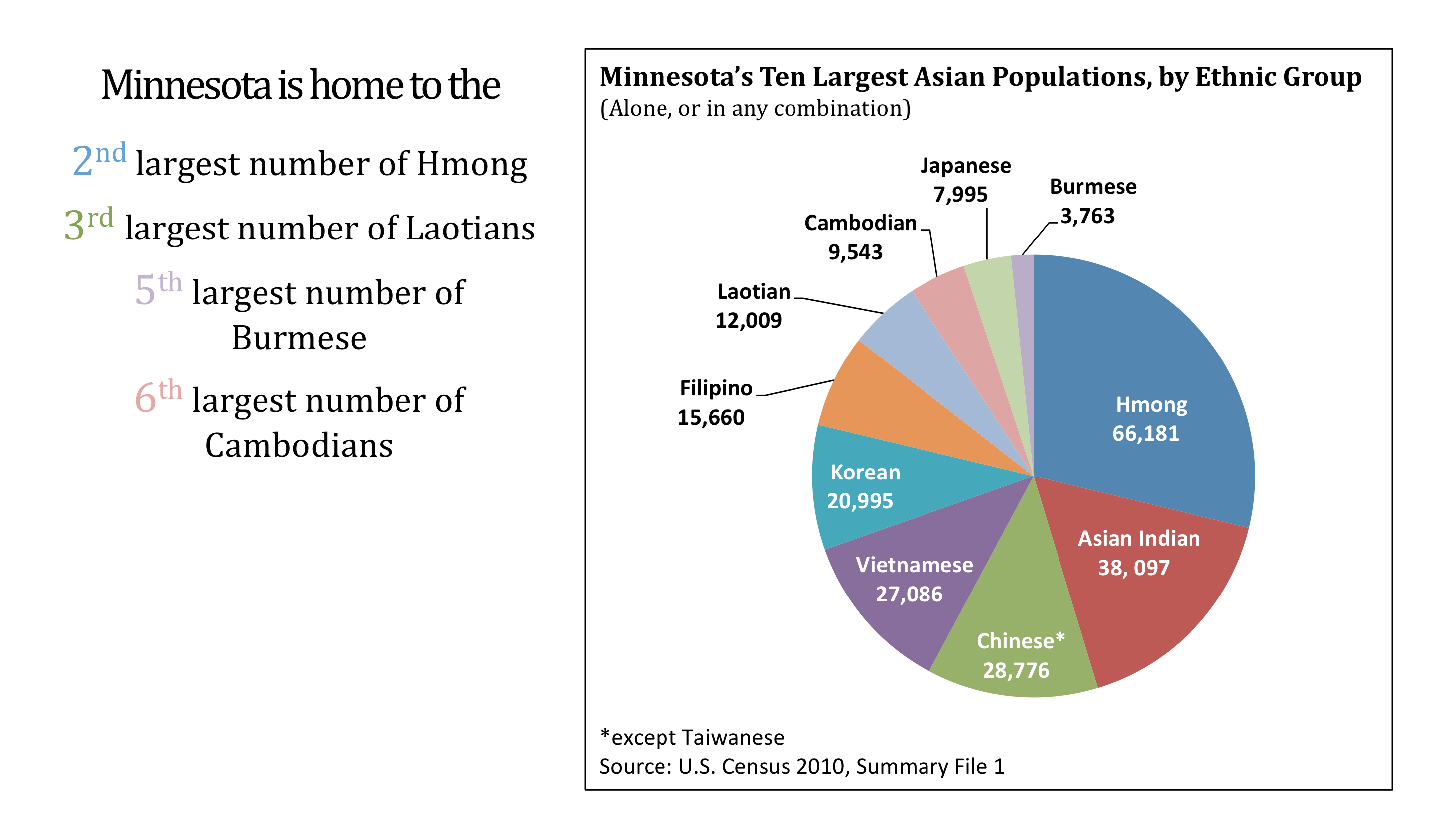
According to the 2010 U.S. Census the eight largest Asian American populations in Minnesota are the Hmong, Asian Indian, Chinese, Vietnamese, Korean, Filipino, Laotian, and Cambodian communities. Specifically, 27 percent of the total population identify themselves as Hmong, 15.5 percent are Asian Indian, 11.7 percent are Chinese, 11.1 percent are Vietnamese, 4.9 percent are Laotians, and 3.9 percent are Cambodians (See Figure 2).

Minnesota is home to over 40 different Asian Pacific Minnesotan immigrant and refugee communities. Each community has its own strengths and challenges that may be unique to that ethnic community. The following is an overview of how the Korean American community is faring in Minnesota.
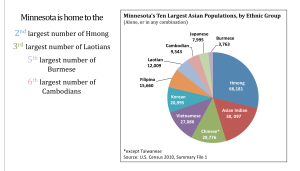
Korean American Community Overview chart

The Korean community in Minnesota is defined by three distinct populations: Korean immigrants who came to the state as wives of U.S. servicemen following the Korean War, Korean immigrants drawn by educational and professional opportunities, and Korean adoptees who were brought to the state by Minnesotan families after the end of the Korean War.[i] There are about 13,000 to 15,000 Korean adoptees in the state.[ii] Most members of the Koreans community in Minnesota are professionally employed with a median household income of $60,984.i   APA ComMNet REACH CORE project staff and volunteers met with Korean American community members and leaders throughout the Twin Cities to understand the community’s strengths, challenges and other social and environmental factors affecting its overall health and well being.

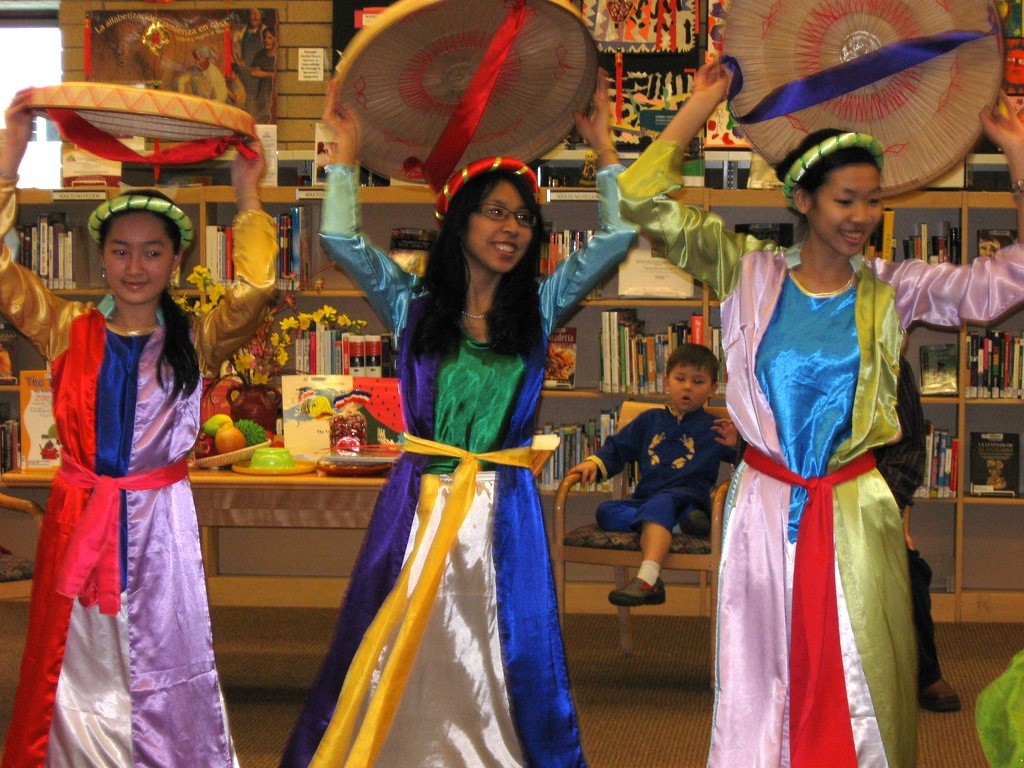
 korean dance

Korean American Community Strengths

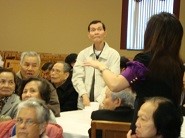
In general, the Korean American community perceived its quality of life in the Twin Cities as one consisting of increasing financial wellbeing and higher educational and professional attainment. Ample activities and opportunities exist for Korean Americans to be academically, financially, and socially healthy.   Korean American members who participated in the project said they were proud of the their community’s academic and professional achievements. More than half of the Korean American population over the age of 25 years old in the state has a college or professional degree and only 6.3 percent are unemployed.i   As a guest in the Korean Radio show stated, “Many Koreans in Minnesota have professional jobs. High education standard is one of characteristics of Minnesota. A good educational environment is the most important factor too.” Korean Americans also identified having a good family relationship and relationship to the Korean community was important towards a healthy life in Minnesota. They added that maintaining a spiritual or religious practice, such as the Korean church, helps community members to be healthy.

Korean American Community Challenges

Korean American community members who participated in the project indicated that elders and newly arrived immigrants faced challenges in accessing appropriate health care services. Many stated that the lack of resources for limited English proficiency populations and affordable health insurance were among the issues that concerned Korean Americans. “Cost of private health insurance are high. Some of Koreans are still working to pay their health insurance. We have a private insurance before [turning 65 years old, when one is eligible for government subsidized health care]. We need to have solution for this,” stated one guest during the Korean radio show. APA ComMNet survey results also showed that Korean Americans were less likely to do any physical exercise or see a medical professional and were more likely to have been diagnosed with diabetes and suffer a heart attack than most other AAPI groups that participated in this project (See Figure 4).

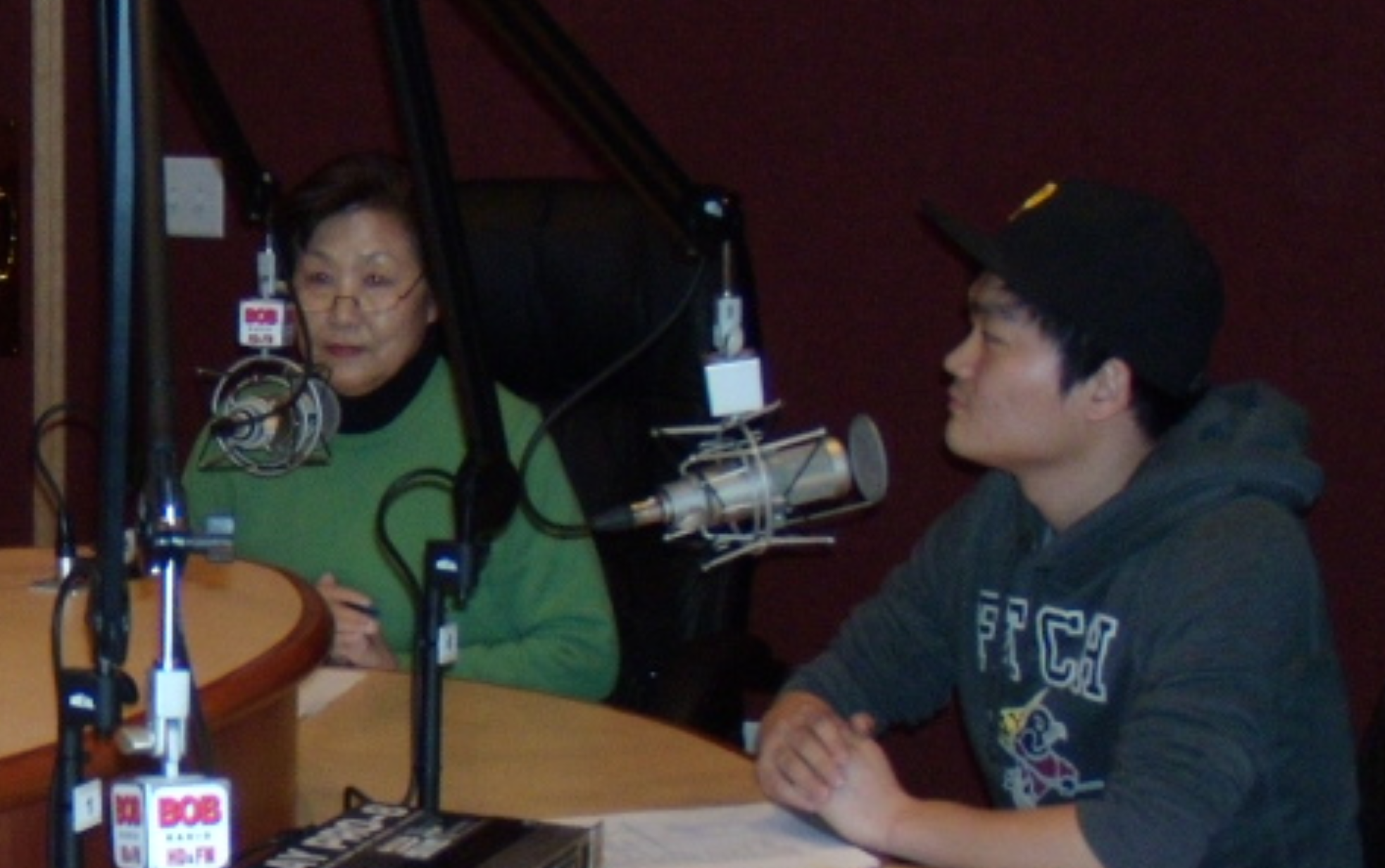
REACH CORE Radio Talk Show:

radio talk

Korean Community

Host Park: What are the three most important factors for a healthy Korean community in Minnesota?

Guest Kang: Strong family relationship, healthy life style, and religious or spiritual values are the three most important factors. Strong family relationship can improve our community in many ways like low crime rate, child education, safe neighborhoods, etc. Keeping healthy life style will be helpful for our community to become healthy. Religious values are the most important one.

Host Park: I agree with that strong family relationship is one of the three most important factors. When one’s home is happy, all goes well.

[i] Minnesota Historical Society, 2013. “Becoming Minnesotan: Stories of Recent Immigrants and Refugees.” St. Paul, MN: Minnesota Historical Society. Retrieved January 8, 2013 (http://education.mnhs.org/immigration/)
[ii] Olson, Norma Smith, 2010. “We’re From Here: New Book Gives a Visual History of Adopted Koreans in Minnesota.” Minnesota Women’s Press (September 10, 2010).


Remembering Where We Came From

ChildrenAroundtheWorld

www.digitween12-2.flatclassroomproject.org

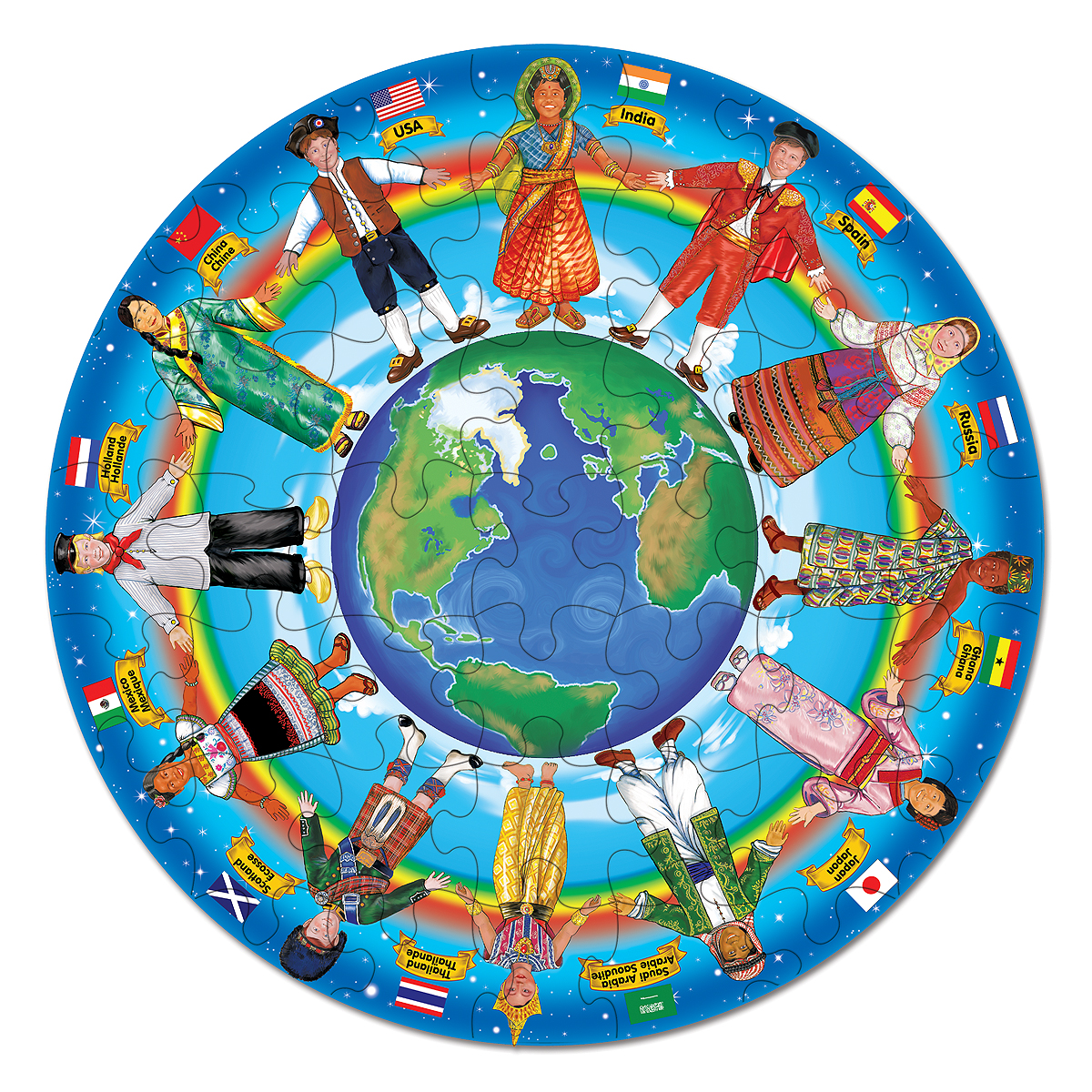
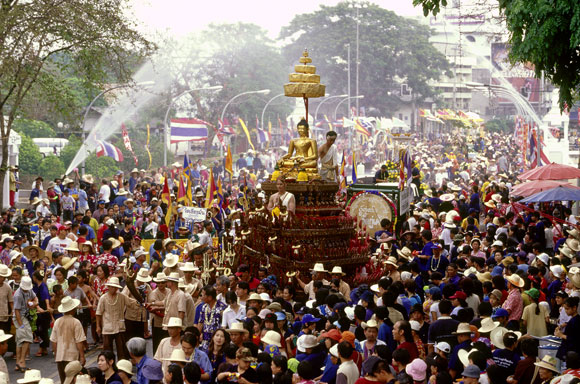
Many of us came from our parents and our parents came from their parents and so on. Everyone must’ve came from somewhere in the world to get to the place that they are now. As time passes on, we can forget our cultural roots and traditions that has faded due to many reasons. Such as assimilation, none to very little exposure to our own cultural heritage, or/and untold/forgotten stories, values, folktales, and traditions.

Thankfully, we have many resources nowadays if we want to learn where our ancestors come from, where they live, and such. But the real reason why it’s important to know your own cultural background is because it has to do with your identity. It is about learning more about your ancestors and understanding that as an individual, you and everyone else all connect somehow and are a part of a bigger world.

For example, the struggles of our ancestors directly impacts us how we may live life or make decisions today because we learn from our right and wrong choices. Idealistically, people like to become more advanced/better over time and without our ancestors going through the challenges that we didn’t have to, our present lives was made easier by little factors.

Some people in your life like your parents, grandparents, and elderly relatives had to go through hard times to provide for their families and themselves. Whether it was giving up their own education to find a job, leaving their home country to emigrate to a different country, sacrificing their time to invest in their offspring, and shedding blood, sweat, and tears for the sake that everyone present today has a better life and more opportunities.

Also, it is thanks to our ancestors that today the world have so many different kinds of ethnic groups, languages, religions, civilizations, and intellectual knowledge about life, space, animals, and more. Our ancestors made some impact in the future where we can arguably say that we do live in a better world in some aspects.