10 Things You Need to Know About the Asian Diet

Post10Blog3

The main focus of the Asian diet is to create wellness. This I believe is the best medicine. By practicing these diet habits you will see improvement in your overall health. We all know:

“Health is not simply the absence of sickness.” — Hannah Green

This top 10 list serves up healthier habits, better nutrition and enhanced immune function. This top 10 list has been perfected and practiced for centuries.

To paraphrase Sun Simiao, the great Chinese physician in the sixth century, one wastes the skill of a great physician if one does not first consider the food he or she are eating. This is still true today. Consider also when you eat and how you eat as you read these 10 Asian diet habits.

#1. Limit Drinks, Especially Cold Drinks With Meals

Americans have a bad habit of drinking a cold glass of water or soda with meals. Changing this habit alone will create better digestion of food. Limit fluid intake with your meals and you will stop diluting your digestive enzymes which are so important for proper digestion. Green tea or other hot teas before a meal supports enzymatic activity and helps enhance your digestive abilities. It’s best to add liquids 30 minutes before or after meals, not during.

#2. Have Soup Often

Soup is a nutrient dense food and fills you up quickly. You don’t need much, just a half cup is beneficial. Most Asian soups are made with bones and/or combinations of vegetables so you’re getting lots of vitamins and minerals even with a small portion. Whether it is bone broth soup, vegetable or miso, soups are rich in vitamins and minerals and easily absorbed. Secondly, but equally important is that the warm temperature of soup (like tea) can improve the entire digestive process.

#3. Eat a 3:1 Ratio Vegetables to Meat

3:1 means three times the amount of vegetables to the amount of meat. The meat and potato American diet does not make much room for vegetables on the plate. In fact, the favorite American vegetable, potatoes, (i.e., French fries) should be replaced with sweet potatoes if you absolutely can’t live without that starch. Better still, consider vegetables with bitter flavors. Give radishes, radicchio and bitter melon a spot on your plate.

#4. Small Plates and Chopsticks

Small serving bowls and small plates are a great way to eat smaller portions. I love to mix up attractive small plates and bowls in different shapes and sizes. Not only is it aesthetically pleasing to eat from these but it helps you eat smaller portions. Chopsticks are an easy way to avoid the shovel techniques of eating. For the average American inexperienced chopstick user, they are guaranteed to slow down your rate of consumption and give your stomach time to send the message to your brain that you’re full and it’s time to stop eating.

#5. Rice Combining

Rice combinations like black, brown, red, or even purple rice are nutritionally denser than white or brown alone. (The best is unpolished/less processed rice, because it is rich in B vitamins.) Rice is eaten to supplement the meal in Asia, not a main course. Rice has always been a popular carbohydrate, cheap to grow and easy to transport and store. But as a carbohydrate it is converted into sugar during the digestive process. This means it can cause a dramatic effect in our glycemic index. This is good for fast energy, but bad if you want to avoid blood sugar fluctuations and bad for those who are diabetic or pre-diabetic. Rice combinations are less starchy therefore less sugar conversion and lower in calories.

#6. Not Every Night Is Dessert Night

My kids will tell you from the time they were very little if they asked about dessert, my standard answer was “tonight is not dessert night.” Admittedly, this didn’t work so well past the age of 7, but it’s still a great rule of thumb. If you must have dessert make it fruit. Fruit is nutritious and delicious and a common Asian dessert. Cut and serve it up in a fun and interesting way to make it that much more exciting. Sugary cakes, cookies and ice cream can be for special celebrations only.

#7. Seafood — See Food Differently

No need to repeat what we already know. Research supports this common Asian diet practice of eating fish daily. We’ve heard all about the healthy oils from fish. Fish has always been part of man’s diet nearly everywhere in the world, not just Asia. But the Asian culture has kept this part of their heritage alive better than most.

#8. Asian Snacks are Healthier

Take a look at what Asians eat for snacks and compare it with the American chips and cookies and you’ll understand part of the reason Americans are so overweight and Asians are not. Choose seaweed snacks, nuts, dried fruit and seeds. I love pumpkin and sunflower seeds. All are easy to find in nearly every market. These healthy snacks are packed full of micro-nutrients, vitamins and minerals and the choices are limitless. One caveat, do watch out for the salt content of nuts. Raw is preferred but admittedly not as tasty as salted. If you really want the salt, try “lightly salted” versions.

#9. Optimize Food Temperatures With Seasons 

Energetic temperatures of foods should not be overlooked. Eat warming foods in cold weather and cooling foods in hot weather. This common-sense rule of thumb is barely spoken in Asia because it’s simply practiced. Cold drinks and cold foods such celery, melons and cold salads are not eaten in the middle of winter. Hot soups and stews with meat are preferred because this is what the body needs in cold weather. A hot summer day is the perfect time for watermelon or a cooling drink made with aloe and cucumber. Every food has an energetic temperature and acts on the body accordingly. Eating the right temperature foods during the various season of the year is an important part of a healthy diet.

#10. Avoid Cow’s Milk and Milk Combining

Milk combines horribly with just about everything, while supplying vastly too much calcium and not enough magnesium. Cow’s milk is completely absent in Asian diets. Other cultures such as Jewish kosher rules recognized thousands of years ago that milk products should be eaten apart from other foods. If you just can’t give up cow’s milk, at the very least don’t ignore the tenet of food combining. Combining the wrong foods, i.e., dairy, slows down gut motility to a snail’s pace, the exact opposite of what is best for healthy digestion. Replacements for cow’s milk are easier than ever today with the arrival of convenient cartons of almond, coconut, rice or organic soy milk.

That’s 10, but if you would like just one more Asian diet tip there is one that the previous 10 helped create. #11 is regular bowel movements. Healthy eating and good digestion create healthy bowel movements and a healthy gut is a clean gut. Although often not talked about in the S.A.D. Standard American Diet, a minimum of one bowel movement a day is an absolute necessity. So much of our immune system is dependent on our gut health and this is one reason proper digestion is key to optimizing our health and wellness. This is our body’s natural detox method and the last on this list of Asian diet tips.

Original article link here.

Honoring Cultural Exercises

Join us for the 1st ever Hmong Dance Drama – Longing for Qeej

Post11Blog1

Minneapolis, Minnesota – In kicking off the Bicultural Active Living Lifestyle (BALL) Campaign, Asian Media Access and Iny Asian Dance Theater join hands to showcase the first ever Hmong Dance Drama – Longing for Qeej at both Cities – Minneapolis and St. Paul, to help the communities to recognize the beauty of the cultural exercises.


ST PAUL:

July 19 (Sunday), 5:30pm at

Central Park Frank Rog Amphitheater

2540 Lexington Ave. N
Roseville, MN 55113

MINNEAPOLIS:

July 23 (Thurs), 5:30pm at

Outside of Asian Media Access, on the Plymouth Ave

2418 Plymouth Ave. N.,

Minneapolis, MN 55411

Screen Shot 2015-07-16 at 3.11.35 PM

Both events are part of Asian Media Access’ BALL strategy to emphasis on bicultural healthy living by utilizing cultural pride and parent involvement as motivations for youth to be proud of themselves, and exercise more through cultural exercises.  By wearing beautiful costume, 
listening to traditional music, stepping into ancient footsteps, it gives youth a sense of self-esteem, and cultural identity other sports may not offer, along with strong parents’ 
support in preserving the cultural traditions.  Therefore, both AMA and IADT have supported youth learning/performing Asian dances as a way to live healthier in a bicultural environment.

Longing for Qeej will be performed by Iny Asian Dance Theater’s 109 dancers, which is a dance drama adapted from Hmong folktale portraying the origin of Qeej – a traditional Hmong music instrument, a mouth organ with six bamboo pipes of different lengths attached to a wooden air chamber.  Hmong believes that Qeej can communicate between the heaven and the earth, the living and the dead.  One of the opening mysterious dance – the Dragon Dance will be performed by Iny Asian Dance Theater’s most advanced group – MN Sun Shine.  The team has long history of winning titles of Hmong New Year Dance Competition.  Not only the dance includes a beautiful dragon head with matching gold/red masks, MN Sun Shine dancers has also performed this powerful dance with explosive physical capacities along with beautiful costume, and refreshing Asian music.

This is not the first time Iny Asian Dance Theater brought the Hmong dances/folklore to the broader audience.  Led and Choreographed by Acclaimed Hmong Artist, Iny Xiong, Iny Asian Dance Theater has successfully served more than 200 students annually.   Its mission is to broaden students’ ability and general public’s appreciation of Asian Dances through teaching and performance, and their major projects include: 1) Bringing the Asian Traditional Dances to Life, with a special focus on Asian Indian, Chinese, Hmong, Laotian and Thai dances through weekly dance classes and community engagement performances; 2) Sharing Asian cultures and talents with mainstream audience to build a better community of appreciation of diverse arts with Annual Recital and newly created Dance Drama Performance series.   Currently, Iny Asian Dance Theater has 13 different levels and ages groups.

Both performances are outdoor, please bring your lawn chairs to enjoy a 2-hours Asian dances you have never seen before.   This unique project is sponsored by the MN State Arts Board (which that was created by a vote of the people of Minnesota on Nov., 2008); Minnesota Department of Education; Roseville Parks and Recreation; and Minneapolis Roseville Parks and Recreation.  For more information, please check the website at www.inyasiandancetheater.org, or call at 612-376-7715 or e-mail info@inyasiandancetheater.org


Healthy Cookout Creations – A Multicultural Style

The summer months are always a great time to start up the grill and invite over friends and family! The problem is, while all of the food is delicious, barbeque and all of its accoutrement add up to be a not-so-nutritious splurge. To rectify this, we’re providing you with three recipes that can help you keep the flavor you crave while eliminating the fat and calories you don’t. 

Hawaiian Skewers

Hawaiian Skewers

Ingredients

  • 1-2 packages of boneless, skinless chicken breasts
  • 2 14oz cans of pineapple chunks
  • 2 sweet onions, any variety
  • ½ cup Barbeque sauce
  • Lime juice
  • Wooden or metal skewers (if you’re using wooden, don’t forget to soak them in cold water!)

Directions

The beauty of this recipe is that you can make it up to a day in advance. Cut up the chicken and onions into chunks. Place the pieces in a bowl and pour the pineapple chunks, and a quarter of their juice, on top of the chicken and onions. Squeeze barbeque sauce and lime juice (to your liking) on top of ingredients and mix. Arrange the chicken, pineapple, and onion on the skewers. Refrigerate for at least an hour, then grill away!

Greek Yogurt Coleslaw

Greek Yogurt Coleslaw
Ingredients

  • ½ cup nonfat, plain Greek yogurt
  • 3½ tablespoons cider vinegar
  • 3 tablespoons sugar
  • 1 teaspoon kosher salt
  • ⅛ teaspoon black pepper
  • 16 ounces (about 6¼ cups) bagged coleslaw blend or shredded cabbage

Directions

In a small bowl, combine Greek yogurt, vinegar, sugar, salt, and pepper and whisk until smooth and thoroughly combined. Place slaw blend/cabbage in a large bowl and pour Greek yogurt dressing mixture over top. Stir to coat cabbage thoroughly. Cover and refrigerate until using (preferably at least 30 minutes)

Recipe from twohealthykitchens.com

Red, White, and Blue Fruit Salad

Red, White, and Blue Fruit Salad

Ingredients

  • ​4 cups sliced strawberries
  • 2 cups blueberries
  • 2 cups diced watermelon
  • 1 cup diced jicama (or apple)
  • 1½ tablespoons lime juice
  • 1½ tablespoons honey
  • 1 tablespoon minced mint
  • ⅛ teaspoon chipotle chili powder (optional)

Directions: 

Place strawberries, blueberries, watermelon, and jicama in a large bowl. In a small bowl, stir together lime juice, honey, mint, and chili powder. Pour over fruit and toss to coat.

Recipe from spicysouthernkitchen.com

Credits belong to rightful owner.


Benefits of Water Exercise

swim_girl

www.newjerseyswimming.com

Swimming is the fourth most popular sports activity in the United States and a good way to get regular aerobic physical activity 1. Just two and a half hours per week of aerobic physical activity, such as swimming, bicycling, or running can decrease the risk of chronic illnesses 23. This can also lead to improved health for people with diabetes and heart disease 2. Swimmers have about half the risk of death compared with inactive people 3. People report enjoying water-based exercise more than exercising on land 4. They can also exercise longer in water than on land without increased effort or joint or muscle pain 56.

Water-based Exercise and Chronic Illness

Water-based exercise can help people with chronic diseases. For people with arthritis, it improves use of affected joints without worsening symptoms 7. People with rheumatoid arthritis have more health improvements after participating in hydrotherapy than with other activities 8. Water-based exercise also improves the use of affected joints and decreases pain from osteoarthritis 9.

Water-based Exercise and Mental Health

Water-based exercise improves mental health. Swimming can improve mood in both men and women 10. For people with fibromyalgia, it can decrease anxiety and exercise therapy in warm water can decrease depression and improve mood 1112. Water-based exercise can improve the health of mothers and their unborn children and has a positive effect on the mothers’ mentl health 13. Parents of children with developmental disabilities find that recreational activities, such as swimming, improve family connections 14.

Water-based Exercise and Older Adults

Water-based exercise can benefit older adults by improving the quality of life and decreasing disability 15. It also improves or maintains the bone health of post-menopausal women 16.

A Good Choice

Exercising in water offers many physical and mental health benefits and is a good choice for people who want to be more active. When in the water, remember to protect yourself and others from illness and injury by practicing healthy and safe swimming behaviors.

Original article linked here.

Anorexia & Bulimia

bulimia-anorexia-and-oral-health

Photo credit: www.deardoctor.com

Anorexia and bulimia are among some of the most common type of eating disorder. Factors are often associated with or can cause eating disorders are low-self esteem, bullying, distorted body images, food phobias, social or/and peer pressure, and more. Eating disorders are treated in combinations of doctors, therapists, consultants, and nutritionists. Also, the support of family and friends are crucial to helping someone overcome their eating disorder.

What is anorexia? It is a eating disorder where the individual does not want to eat food or not enough to keep their body weight. They often think of themselves as overweight and see themselves to not be thin enough. This can be accompanied by excessive exercising or starvation. People with anorexia are usually very underweight.

What is bulimia? It is a eating disorder where people binge eat and then either throw up the food or do extreme amount of exercises to burn the large amount of calories. People will binge eat and purge on a regular basis, which can cause serious health issues. Bulimia can cause people to develop compulsive behaviors and damage their teeth and esophagus along the way due to stomach acid. People with bulimia are usually at their body weight or overweight.

So what can you to help yourself if you are experiencing a eating disorder or someone with it?

  • Always seek out professional help who can help diagnosed the eating disorder, prescribed medications, provide consultations, and if needed, get more help from other professionals.
  • Get support from family and friends. They can help provide comfort and additional advices.
  • The road to recovery is changing your perspective towards a more positive outlook. Learn to accept yourself for who and what you are. It is not as easily done as said, but time will heal any insecurities that you may have.

The Benefits of Walking

Post9BlogIt'sTimeForAWalk

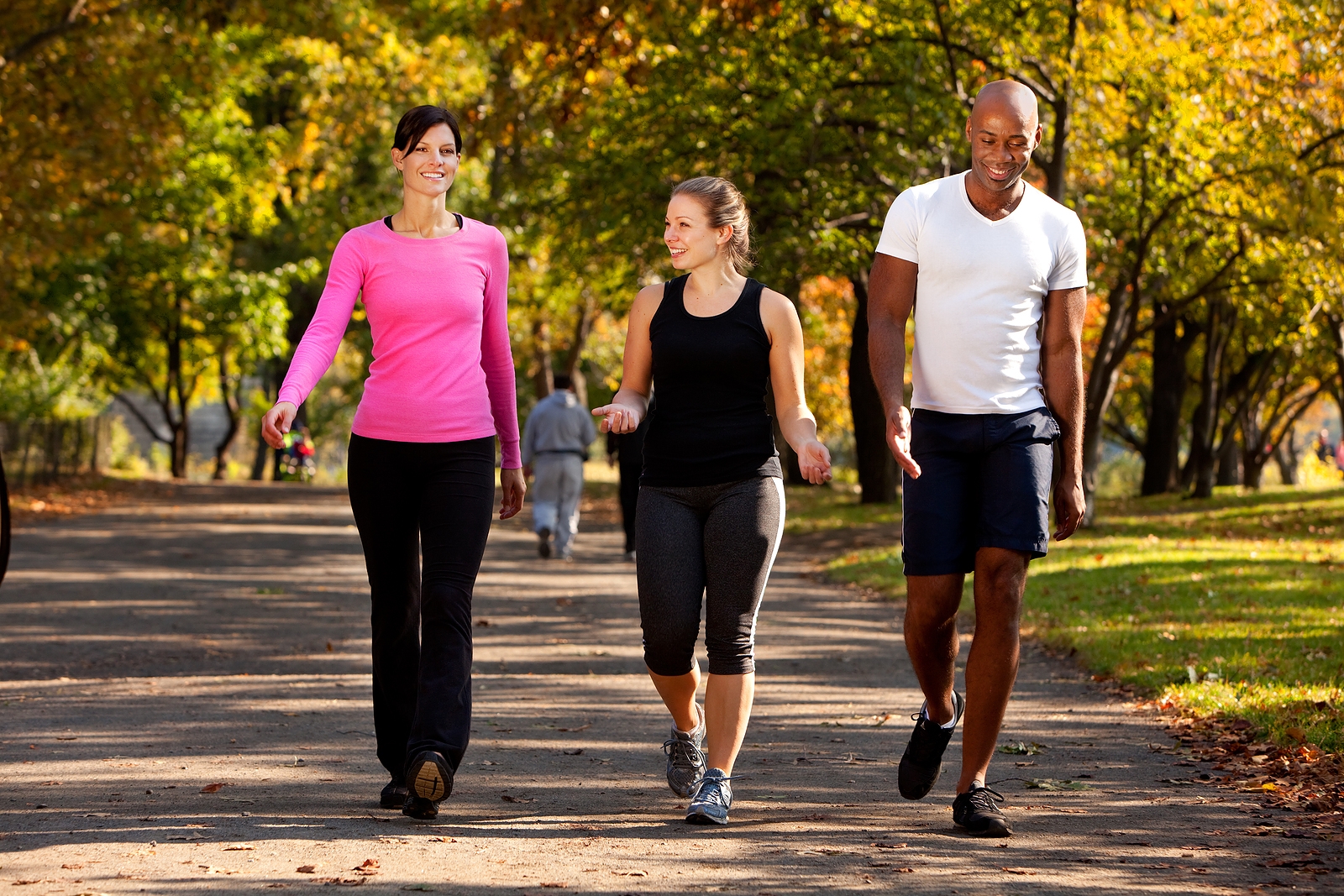
One of the easiest and effective way to stay active is to walk. Going on daily walks or walking more often can help your body stay healthy. Oppose to not walking at all, even a little exercise can help you maintain an active lifestyle. Here are some health benefits to walking and ways you can walk more:

  • Incorporate stretches, warm ups, and different exercise activities. It can help you walk longer and better. As a bonus, it’ll help you burn more calories. It would effectively help you out even more if you can have a routine.
  • During your breaks at work or free time, instead of sitting down take a stroll. It is a good change for your mind and body as you are required to move. It can help improve your mood, blood circulation, maintain blood pressures, and more. Many jobs require people to sit 8 hours all day and it doesn’t do the body any good. Humans weren’t made to sit all day so it’s good to do little exercise there and here.
  • Walking can help maintain your weight and even help you lose weight. Although walking is not intensive, you can lose weight by walking longer. The faster you walk or run, the more calories you lose. Also, since it helps your body become more active you will decrease the chance of developing obesity, osteoporosis, and lower the risk of plausible diseases, and diabetes.
  • “Among 44,452 male health professionals, walking at least 30 minutes a day was linked to an 18% lower risk of coronary artery disease.” – http://www.health.harvard.edu/newsletter_article/Walking-Your-steps-to-health
  • If you can walk there, do it! If you are going somewhere nearby, instead of taking a vechicle there it would be better for you to walk there. Although it can be boring, bring your music or whatever it is to entertain you along the way. Just make sure to pay attention to where you’re heading.
  • Wear comfortable shoes! If you know you are going to walk for a long period of time or you need special shoes to help you walk then be prepared! The chance of you walking in an uncomfortable shoes all day isn’t the best situation to be in. It can cause your feet to develop rashes, sores, and more.
  • Do it with a friend or a pet! It is more fun to walk with a partner so if you have someone to do it with, that’s even better. They can serve to motivate you to walk more often and longer.

Ways to Help Cope With Social Anxiety

s.a.-pic

http://www.hendersoncounselingservices.com/wp-content/uploads/2015/05/s.a.-pic.jpg

Being in a social environment can be daunting and very uncomfortable to many people. It is a problem that many of us face when being put an socially awkward position. Or even the thoughts of having to socialize or being in a social place can make people anxious. Some people may have social anxiety worse than others or experience it in different ways, locations, and situations.

According to http://www.webmd.com/, social anxiety or social phobia is an “anxiety disorder in which a person has an excessive and unreasonable fear of social situations. Anxiety (intense nervousness) and self-consciousness arise from a fear of being closely watched, judged, and criticized by others.” Some symptoms include:

  • Experiencing intense anxiety
  • Sweating
  • Increase in heart rate
  • Avoidance of social situations
  • More at -> http://www.webmd.com/

Here are some ways to help people cope with social anxiety:

  • Make sure to go to your doctor or local clinic to help you if you think you are experiencing social anxiety in unusual or extreme ways. If it is heavily impacting you, it would be very helpful for you to receive help and be aware of your medical condition. Ask your doctor if there is a possibility that it could be linked to another illness or a result of medications that you may be currently on.
  • Practice your social skills with close family, friends, and relative members. The more comfortable you are with yourself, you can start to relax and worry less. They will help you slowly communicate and adjust to social situations. Try different conversation starters, questions, and follow-up responses. Put yourself in social settings so that you can become more used to social settings.
  • Try to avoid thinking about what other people think about you. Whether they may or may not be judging you, you are in charge of how you feel about yourself. Concerning yourself over how you appear to others is not worth your time. Other’s judgements does not evaluate you as an individual.
  • Understand that you are not the only one who experience or goes through this. As part of growing up and developing, expect to be placed in weird situations, expect to be given endless criticisms, expect to have unwanted judgements, and above the all. You can’t stop it or avoid it, but you can learn and grow from it. You will eventually develop your own resilience, have thicker skin, and understand that not everyone wants to be your friend or perceive you in positive ways.
  • Your mental health is very important because it determines how you perceive and respond to stressful situations. Invest in some time for yourself to reorganize your thoughts, worries, goals, and such. Do little things that help make your life easier, simpler, or healthier.

AMA Radio Talk Show (2012) – Korean

week7Blog8

AMA Radio Talk Show – Korean

Date recorded: 2/22/2012 Wed 5:00 pm

Host: Sungho Park

Guest: InSook Jung, ChunYoung Park, KyungSoon Shin, JungHae Oh, MoonSup Kang

————————————————————————————————————————-

Sungho (SH): Introduced self, REACH program, and Asia Media Access

InSook (IS): Introduced self – She has lived in Minnesota for 36 years and been retired.

ChunYoung (CY): Introduced self – He immigrated to Minnesota in 1936.

KyungSoon (KS): Introduced self – She has lived in Minnesota for 30 years.

JungHae (JH): Introduced self – She has lived in Minnesota for 30 years. She is a restaurant owner in downtown in Minneapolis.

MoonSup (MS): Introduced self – He has lived in the U.S for 36 years and been retired.

SH: Introduced today three questions – 1. What are the three most important factors for a healthy Korean community in Minnesota? 2. What are the three most important health issues in a Korean community in Minnesota? 3. What are the three most risky behaviors against a healthy Korean community in Minnesota?

SH: What are the three most important factors for a healthy Korean community in Minnesota?

IS: Strong family relationship, healthy life style, and religious or spiritual values are the three most important factors. Strong family relationship can improve our community in many ways like low crime rate, child education, safe neighborhoods, etc. Keeping healthy life style will be helpful for our community to become healthy. Religious values are the most important one.

SH: I agree with that strong family relationship is one of the three most important factors. When one’s home is happy, all goes well.

CY: Overall atmosphere in Minnesota is very active. Because of cold weather, Caucasian is majority in the population. There are many professional jobs in Minnesota. Many Koreans in Minnesota have professional jobs. Also, high education standard is one of characteristics of Minnesota. A good educational environment is the most important factor, too.

KS: I agree with Mrs. Jung’s opinion. Strong family relationship is important. Religious belief supports for our healthy life. Korean church is supporting immigrants to be adapted to the U.S. Healthy life style will be built in a way volunteering to community and caring other neighborhoods by a religious belief.

MS: The most important thing is to understand a culture of America and social system. Since there are many difference between the cultures in Korea and America, understanding them will be very helpful for us to be adapted in the U.S. Also, solving language problem will help since it is much effective way to understand the America culture by learning the language.

SH: We can think religious belief, strong family relationship, and understanding America culture are the three most important factors for a healthy Korean community in Minnesota.

SH: Are you satisfied with the health care system in Korean community?

SH: Student insurance does not cover many common health problems like dental problems.

JH: Costs of a private health insurance are high. Some of Koreans are still working to pay their health insurance. We have a private health insurance before 65 years. We need to have a solution for this.

BREAK

SH: Welcome back to our discussion. We start at the second question. What are the three most health issues in a Korean community in Minnesota?

MS: Many Koreans usually do not exercise. This life style will cause high blood pressure and cardiac disorders.

SH: I think regular exercise is very important. When I regularly exercised, I felt less fatigue.

CY: Because of cold weather in Minnesota, there are many winner sport events. However, many Koreans do not participate.

IS: There are many fitness centers in Minnesota. Our environmental conditions for exercise are good. Therefore, their will of exercise is important.

SH: The health issue that is the most important in the Korean community was health problem caused by lack of exercise.

SH: What detail efforts do you think that can improve community health?

IS: We can make an exercise group or regular meeting. Every one encourages each other. Also, if there is someone who can lead the exercise group or meeting, it will be better.

SH: I heard annually there is a Korea shorts event in Minnesota. It is a great way to encourage people to exercise.

MS: However, only few people participate in the event. Many people do not participate. This is a problem. Although we make many sports events, only few people will participate. We need more participation. I think generally Koreans do not tend to participate in public events. To encourage people to participate, we need to make our events more interesting and well-prepared.

SH: We can think health problems associated with lack of exercise. As a solution, we can organize exercise group or make regular meetings for exercise. To encourage people to participate in the events, the agency needs to make well-prepared and interesting sports events.

BREAK

SH: We are back. Welcome back to our discussion. What are the three most risky behaviors against a healthy Korean community in Minnesota?

JH: Bad eating habits and lack of exercise are the most risky behaviors against a healthy Korean community in Minnesota. In my case, sometime I skip meals and overeat at late night since I am very busy on my business. I know exercise is important and I need to exercise, but it is difficult to afford my time for exercise. I think if we work together like in a group and encourage each other, it help improve our health.

KS: I think exercising together is a good idea. After exercising, I feel less fatigue. Our family try to eat healthy foods like fruits and vegetables.

SH: I agree with that these two behaviors are the most risky behaviors against a healthy Korean community in Minnesota. I want to add another factor. Smoking might be one of the most risky behaviors. Surprisingly many students are smoking while few seniors and middle-aged males are smoking. It is a problem since the students will be following generation in the Korean community. What efforts do we think that can reduce the smoking population?

JH: Smoking is addiction. Their will of quitting smoking is more important than social regulations. Despite of very cold weather, many heavy smokers smoke outside since they cannot smoke inside a building.

SH: I think so. In my school, there are many programs for quitting smoking. However, very few smokers participate.

IS: Also, there are some gamble problems. I was some of cases. Some people have gambling debts and some of them are in bankruptcy.

SH: How do we prevent and solve these problems? Can you educate them?

IS: We already have the program for quitting smoking and gamble problems, but they do not participate in those programs.

MS: We really need their participation. Moreover, we need to get their interest.

IS: Currently, there is no specialist for these matters. If there are enough specialists who can make more effective program, it will be really helpful. We need them.

SH: Okay, that sounds like the biggest reason is their will. Bad eating habit, lack of exercise, smoking, and gamble problems are caused by lack of their will. Also, as the solution and prevention, we think making programs for these problems with specialists in those fields.

SH: We discussed today all questions and could see that religious belief, strong family life, and understanding America culture are the three most important factors for a healthy Korean community in Minnesota. Also, the most important health issue in the community was health problems associated with lack of exercise. As a solution, we can organize exercise group or make regular meetings for exercise. To encourage people to participate in the events, the agency needs to make well-prepared and interesting sports events. From the third question, we could know bad eating habit, lack of exercise, smoking, and gamble problems can be considered as the most risky behaviors against the healthy community. Also, as the solution and prevention, we think making programs for these problems with specialists in those fields.

SH: It was great time to discuss about our current life condition. Thank you for your participation today, again.

Guests: Thank you!

National Men’s Health Month

MensHealthMonth_banner24

http://blog.mhsdiagnostics.com/wp-content/uploads/2013/06/MensHealthMonth_banner24.jpg

June is National Men’s Health Month, a public awareness campaign organized by Men’s Health Network (MHN). The MHN is a national non-profit organization committed to improving the health and wellness of men and their families with health prevention messages and tools, screening programs, educational materials, advocacy opportunities, and patient navigation. According to the Men’s Health Network, the program is celebrated across the United States each June with screenings, health fairs, and other health education outreach activities.

The purpose of National Men’s Health Month is to heighten awareness of preventable health complications and encourage early detection and treatment of diseases among men and boys. It is a great way to help promote healthy living and health awarenesses among different communities.

View the MHN’s June 2015 Calendar of Events and find what upcoming events will take place in your local area in recognition of Men’s Health Month. The site will provide more in depth information and other calendars with different events. Make sure to check it out!

Here is a quick view of the Men’s Health calendar. 
Screen Shot 2015-06-12 at 10.30.03 AM


Source: Men’s Health Month Website

Living is a State of Mind

Post9Blog2

Your perspective on life is a very important part of how you may think about the world, society, people, and more. It is up to you to decide whether you want to go through life negatively or positively. Although you can’t control everything that happens to you, you can control how you feel about them. It is all about perspective and what you are going to do that can make your life better.
  • Take the time to appreciate all the things you already have and don’t worry about what you don’t have. Whether it is your bed, your pets, your books, your family, or anything. It is the little things in life that can make you happy.
  • Don’t compare yourself to others. You are always going to be you and you can’t change that. Trying to be like others or comparing your social status (in real life, on social media, academics, sports, etc.) won’t make you feel better. Everyone goes through their own journey and challenges to find themselves. So be who you are as an individual and focus on yourself.
  • Change is inevitable and unavoidable. Some things may stay the same, but remember that many things will change. You’ll experience changes within yourself and the people surrounding you. It’s about embracing the changes and not avoiding it.
  • Surround yourself with positive people. Being with negative people are going to make you feel negative. They will do you more harm than good. It is best to leave those people behind and move on. Sometimes, you need to evaluate who are the right people for you. They are the people that can help better improve yourself and are going to support you along your way.
  • Having more responsibility means you are growing as a person. Don’t think of it as a hassle or a burden. Everyone will eventually grow up, but not everyone will be able to mature. Also, if you feel stressed out about it, then break things down step by step. See what you need to do and what you want to do.