” The way you dress is an expression of your personality.”
~Alessandro Michele ~
Bruce lee
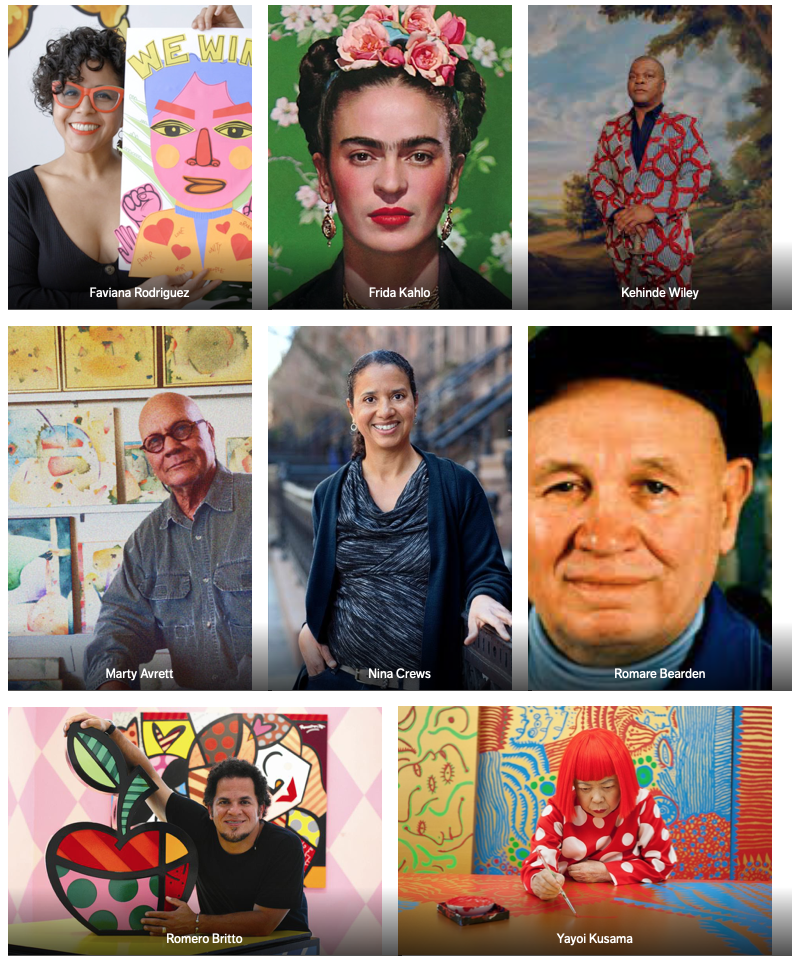
For many BIPOC/ AAPI artists, it may sometimes be challenging to express themselves in a way that is uniquely original, partly due to the fact that society has a so called “standard” way of expression. They may have an idea about what colors they like, what style of shirt and shoe’s, or what brush strokes to use on a painting, what ink with what brush etc, but still maybe they feel something might be blocked or just missing all together. This is when we must look at our world, we must look at our cultures, we must look into our dreams and the stories that our grandparents have told us. Here, in those things, are the colors and textures that can be used to paint your vision, here is the the medium for part of your expression, the other part is you, your life and your experiences. Being brought up in a multi-cultural, or bicultural home is the greatest blessing of all, never forget that. I say it’s the greatest blessing because it not only challenges our minds, but also opens our minds and gives our mind more windows of light to work with. All of these things and more can influence, and also impact our creativeness and our expression.
Ways to express yourself:
Writing poetry
Working with clay
Writing stories
Painting
Composing your own songs
Keeping a journal
When we are able to find that medium in which we can express ourselves through freely, either by painting, writing poetry or stories, or even creating our own original fashion statements, in those moments we have tapped into our potential of unique original expression. For us POC, we may also at times feel ashamed to express ourselves freely, because of how society may label us as POC, or because of the complexities of culture and religion. It can be so challenging to take the courageous step of liberating ourselves through expression, however once we are able to achieve such, all of the nets society has thrown on us will fall away.
I encourage you to be creative, listen to your heart, respect traditional cultures of your own and others, and live each moment as colorfully possible.
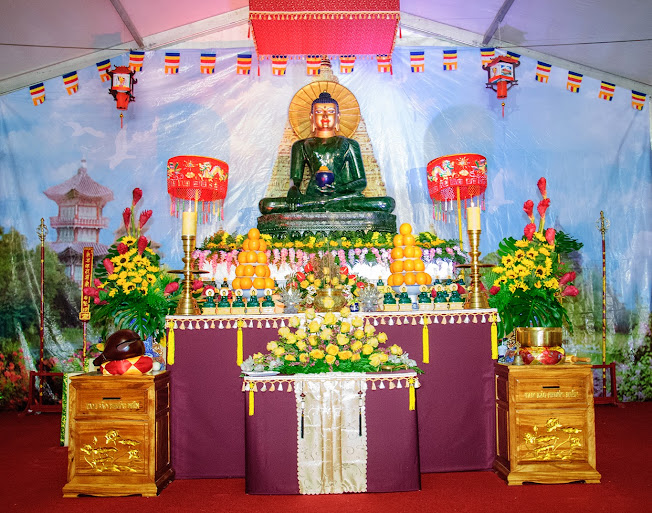
Buddhism’s first root touched earth in India, the peaceful teachings of Buddha Shakyamuni which emphasized healthy living and harmony in community, has traveled across the globe reaching us here in the west by Zen masters such as Thich Nhat Hanh, Bishop Yemyo Imamura and spiritual leader the Dalai Lama. Many of you may have heard of these Buddhist teachers at some point. Let us have a look at Thich Nhat Hanh, Thich Nhat Hanh also called Thay or teacher, is a buddhist monk from Vietnam, global and spiritual teacher, and peace activist. Thich Nhat Hanh became friends with Martin Luther King Jr in 1966, although their friendship was cut short by the assassination of Martin Luther King in 1968, they achieved a lot in a short time. During that brief friendship the two worked together in building and promoting peace and equity, and the result of their selfless hard work has greatly shaped our society, culture, and world today in their vision. Sadly, Thay (Thich Nhat Hanh) died on Jan 22, 2022, however his message of peace, non violence and love still touches our hearts.
Buddhism was brought to the United States by Asian immigrants in the 19th century, during a time when many immigrants from East Asia began to arrive in the New World. Immigrants from China came around 1820, and arrived in large numbers pursuing the California Gold Rush in 1849. Buddhist congregations in North America are quite diverse. The United States is home to Sri Lankan Buddhists, Chinese Buddhists, Japanese Buddhists, Korean Buddhists, Thai Buddhists, Cambodian Buddhists, Vietnamese Buddhists and Buddhists with a family background in Buddhist countries. In 1965 the Immigration Act also increased the number of immigrants arriving from China, Vietnam and Theravada practicing countries of Southeast Asia.
Today the United States has become a melting pot of diversity. The lines of what defines American culture can sometimes seem blurry. Many ethnic communities seek spiritual healing and peace at temples, or from shamans or elders. The beauty of this practice is that also, in a way, they are keeping alive an ancient tradition that the ancestors have practiced and kept alive for use today, an ancient and global key that unlocks the potential in all of us regardless of culture or identity, and yet also gives us the strength and cultural comfort that many of us may need as BIPOC AAPI people. Immigrants who recently moved to the U.S, or even those who have been here for a while can find peaceful refuge in their spiritual communities, and this helps in eliminating acculturative stress and depression. As a black bicultural Buddhist and musician trained in Chinese classical music, I have also found refuge and peace at our local Buddhist temples.
My Journey With Buddhism
My journey with buddhism began at the age of 16. I used to play the Guzheng ( Chinese plucked musical instrument) at the Mall of America (MOA) for the Passage to China event. One time out of the year the Mall would be decked out in gold and red, Chinese lanterns hanging above the rotunda and traditional Chinese opera could be heard as one enjoyed the festivities. There were many performers, lots of traditional arts and crafts, and delicious moon cakes, then before I knew it, the MC spoke over the microphone, “Now introducing Jarrelle Barton!”. After I had finished my performance the audience cheered, and I thought to myself ” Yes!, not too many missed strings!”. Of course I ended my grand New Year performance with a big and humble bow, carefully moved my guzheng to clear the stage for the next amazing talent. As I was sitting there people would come up to ask questions about the instrument, or to say ” AMAZING PERFORMANCE”, but one person who truly stood out, and whom I will never forget was the one who said, ” I see the buddha in you”. I thought wow, I knew who the Buddha was but didnt know much about him, so what did I do?, I went home and studied all about the Buddha. Gradually the more I studied, the more I became interested in this Buddha and his teachings and began to read Sutras or buddhist scriptures. I was amazed at the level of peace the Buddha had attained and I wanted to attain that peace as well, so then I became a buddhist. Usually one becomes buddhist by going to a temple or monastery and receiving the triple gem, however at that time I wasn’t aware that there were temples, monastics and buddhist communities actually practicing, and practicing right here in Minnesota of all places. I started to become like a part of Limei’s family, who’s home was adorned with Buddha statues, scrolls and a huge altar in the living room. She would critique every error I made while writing Chinese calligraphy, speaking Chinese, or wrapping Jiaozi, Limei taught me buddhist chanting, meditation and how to give offerings at the altar. I began to learn so much more about the actual practice of Buddhism and it has helped me on my journey in becoming who I am today. Whenever I was sad or depressed I would listen to Thich Nhat Hanhs words and those words helped to lift my mood and return my mind to balance.
May the sound of this bell penetrate deep into the cosmos Even in the darkest spots Living beings are able to hear it clearly So that all suffering in them cease Understanding comes to their heart And they transcend the path of sorrow and death. The universal dharma door is already open The sound of the rising tide is heard clearly The miracle happens A beautiful child appears in the heart of a lotus flower One single drop of this compassionate water Is enough to bring back the refreshing spring to our mountains and rivers. Listening to the bell I feel the afflictions in me begin to dissolve My mind calm My body relax A smile is born on my lips Following the sound of the bell My breath brings me back to the safe island of mindfulness In the garden of my heart The flowers of peace bloom beautifully.
Thich Nhat Hanh
Bicultural Mission
There is certainly no doubt that we all want to live in a safe and peaceful world. However for this to happen we must ALL take action and put forth the effort and hard work in building a fair and culturally accepting peaceful world, peace starts with YOU. We must be able to express ourselves freely without fear, we must learn to live in harmony with our own selves first and then with others, we must also learn to accept differences. Creating for yourself a bicultural worldview is the greatest blessing you can offer to yourself and to the world. I cant help but be moved to tears each time I read and contemplate on Thich Nhat Hanhs teachings and poems, his vision is also the vision of many BIPOC AAPI people.
We BIPOC AAPI people must constantly endure the weight of white supremacy, It may be difficult for BIPOC AAPI youth to feel they ( Fit In) in school or with their peers. Sometimes they may even experience discrimination for being different as well. BIPOC AAPI people must use our differences as our strengths to fight discrimination, use our bicultural lifestyles to sever the strings of deep rooted white supremacy by educating others about our multicultural lifestyle practices, and inspire others to learn our languages and our traditional arts. Educating people is the only way to keep the wheel of peace turning.
The challenges we face in mental health as BIPOC people are quite complex. First, our cultural identities as BIPOC people may greatly differ from each other, socially and culturally; this can add an even more difficult layer of challenge to mental health as a person of color. Secondly, lack of cultural understanding can also have a role in mental health challenges for BIPOC communities. It may seem easy to put a (one size fits all) label on mental health, however this is not how we should go about our mental health and generational healing. The questions we should be asking are; how do we as a diverse community heal together, without devaluing each other or totally disregarding another?, and how do we establish better equity in mental health specifically designed for AAPI / BIPOC individuals and our communities?.
Now, let us have a look at some in depth information on our unique mental health needs and resources. So often, when seeking help we tend to get just the basic in care, or even at times no care at all due to racial disparities and inequities in the health care system. Some of the factors contributing to lack of care may also be:
Lack of insurance, or underinsurance
Mental stigma which may be greater in AAPI / BIPOC communities
Lack of diversity amongst mental healthcare providers
Lack of providers with a diverse cultural worldview or cultural competence
Distrust in mental health care system
Inadequatesupport for mental health service in safety net settings
Ruth Simmons a former Brown University President, explained in a Washington Post article, individuals who are the target of racist actions “must move through the world limited by sometimes invisible or unpredictable restrictions on their movements, their behavior and their words … Determining how to live life openly and productively in the face of such attacks on one’s existence is a lifelong task.”
Healthforward.org
Photo Credit: NIH.GOV
It is absolutely crucial that we develop better cultural competence in mental health care, with better cultural competence in mental heath we can establish stronger and more interconnected engagement between healthcare providers and those seeking health care. Georgetown University’s National Center for Cultural Competence stated, “A set of congruent behaviors, attitudes, and policies that come together in a system, agency or among professionals and enable that system, agency or those professions to work effectively in cross-cultural situations.” Therefor a more diverse health care team, health care professionals with a deeper cultural worldview, and specialized culturally diverse training is certainly needed in reducing inefficiencies in mental health care.
Shared below are links to diverse mental health resources:
This article discusses the clinical needs for youth and the families of youth in crisis. The clinical needs of children and youth are different than that of adults, much care needs to be taken in establishing health services that can help the needs of children and their families in crisis.
As stated by Vadala, “shamanism is a “universal singularity” or a religious form that can emerge and successfully gain a foothold in a given society when the religious system and social order are compatible with individual small-scale religious leadership. Such systems must require highly flexible social actors, like shamans, who can aid individuals (patients) and lead groups (apprentices and members of a community) in spiritual matters.”
(Vadala, 2019).
What is Shamanism?
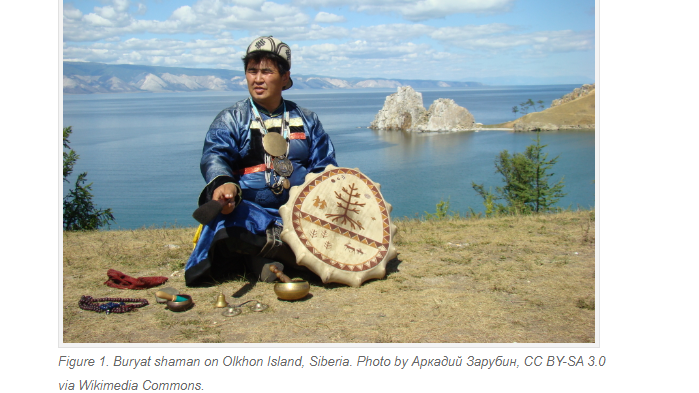
Shamanism is a form of holistic healing that can be highly diverse; also, it is a spiritual practice found in cultures across the world from ancient times up to the present day. Shamanism is known for its holistic forms of religion, healing, and medicine. It combines the use of supernatural spiritual involvement and the usage of natural remedies. The Hmong community is one of the better-known groups that practice Shamanism. There are many responsibilities for the Shamans as chosen healers; also, they understand and know natural remedies. Sometimes, a shaman must negotiate with the spirit for a patient’s soul or well-being. Most traditional Hmong families or individuals might use shamans in combination with American or modern medicine. Additionally, shamans’ practices are adaptable and practical. These practices coexisted over millennia with government systems, organized religious traditions, and distinct cultures (Lawson,2016).
Photo courtesy Human Relations Area Files(Vadala, 2019)
“Because it is not an organized religion as such, but rather a spiritual practice, Shamanism cuts across all faiths and creeds, reaching deep levels of ancestral memory. As a primal belief system, which precedes established religion, it has its own symbolism and cosmology, inhabited by beings, gods, and totems, who display similar characteristics. However, they appear in various forms, depending upon their places of origin.” ~John Matthews, The Celtic Shaman.
(Lawson,2016)
What is a shaman?
The definition of a shaman according to famed American psychologist and consciousness pioneer Stanley Krippner, shamans are “community-assigned magico-religious professionals who deliberately alter their consciousness in order to obtain information from the ‘spirit world.’ They use this knowledge and power to help and to heal members of their community, as well as the community as a whole” (Lawson,2016). Moreover, Krippner describes shamans as the first physicians, diagnosticians, psychotherapists, religious functionaries, magicians, performing artists, and storytellers (Lawson,2016). Based on the study in shamanistic cultures, all adults are responsible for their relationships with spiritual energies, including those of their ancestors, own personal helping spirits, the creator force, and their home environments, such as animals, plant life, and geography. Nevertheless, the shamans have increased the facility for traveling in non-ordinary realms and using their spirit relationships to create changes. These changes will manifest in the physical world to heal individuals and the community (Lawson,2016). Therefore, the cultural healers’ Hmong shamans can help the community recover from the pandemic through their knowledge and spiritual power.
Hmong Shaman and Herb Center (HSHC) has provided accessible shaman and herbal healing to Hmong families in the Twin Cities area since 2019. HSHC provides a unique healing space and direct services to clients. Also, they work to support Hmong families and try to make changes in the broader systems. Moreover, HSHC has the mission to increase access to mental health support for Hmong families so that they may recover their lives from mental illnesses. To achieve HSHC goals, they do the following activities: outreach, education, training, deep practitioner development, and community partnerships at the intersection of healing and racial justice. HSHC offers substance use disorder services, coordinates with physical health care and social services, and provides integrated mental health.
Furthermore, HSHC is a designated organization to serve individuals of all ages regardless of their ability to pay and where they live. HSHC has the vision of empowering the Hmong community with holistic practices through Herbal medicine and Shamanism. Also, they help people to take charge of their wellness and health.
Many of Minnesota’s African immigrants and refugees moved to the United States to give their children better futures, but COVID-19 has put that opportunity at risk. Parents raising young children during the pandemic have faced the crisis in two ways. First, there are the economic hardships of unemployment and the constant worry of how to provide for your family. Second, there are the difficulties of supporting children through the many changes COVID made to everyday life.
The transition to at-home learning left a lot of children feeling isolated and anxious about losing family members. Community health expert Fred Ndip explains, “It was terrifying. We lost a lot of community members both here in the US and back home, so it created a lot of anxiety.”
In addition to fearing for their family, students worried about falling behind in school. Children in the immigrant community faced additional barriers to at-home learning. When parents are not fluent in English or familiar with the US school system, it is harder for them to help children navigate virtual lessons. Limited internet access and library closures also made it harder for students to access support.
But immigrant communities are used to change, and the African commitment to community has fostered resilience. Melissa Nambangi, the Executive Director of the Minnesota African Women’s Association (MAWA) recognizes, “There are many differences between communities from various African countries. But we have something beautiful in common: we all value community. There is always room in our homes for more people. We will always take people in, provide a home-cooked meal, and support each other.”
Community is an important support system when it comes to parenting. As the saying goes, it takes a village to raise a child. Ndip says, “The pandemic took that communal aspect away from us, but vaccines can help us get it back.” Controlling the COVID pandemic with vaccines can help make it safer to reconnect with community and continue to support each other to create a better future for the next generation.
Staying safe and strong for family
It is no secret that mothers will do almost anything to keep their children safe and healthy. Nambangi shares that this instinct runs strong in African mothers like herself: “We cannot let our children be sick. We want them to have the least amount of pain possible. But as women, we were brought up to put ourselves last.”
Caring for children requires strength. To stay strong, it is important for parents to take care of themselves, too. The COVID disease can have serious and long-term health consequences for parents and children. COVID was the fifth most common cause of death between 2020 and 2022 for children ages 1 to 4[1]. But vaccines help reduce the risk of getting seriously ill. Vaccinated people are 10 times less likely than unvaccinated people to die from COVID.[2]
Vaccines also help protect the whole family, not just individuals. When parents get vaccinated, they are less likely to spread the dangerous disease to their kids. When it comes to COVID, protecting your kids means protecting yourself.
This is true during pregnancy as well. Studies show that COVID vaccines are safe for pregnant women and for babies. Vaccines are a common way for mothers to protect their children from many types of diseases. Nambangi recalls, “Any African woman who has become a mom in my time is used to the fact that while you’re pregnant, you receive certain vaccines. For the first couple of years of the child’s life, we must give them these vaccines…against measles, polio, and TB. We seek out vaccines because we know we are protecting the child.”
Just like other vaccines, the COVID vaccines protect reproductive health by preventing long-term health issues caused by COVID. Vaccines are just as helpful for fathers and boys as they are for mothers and girls. Getting vaccinated helps parents stay as strong as possible so that they can be there for their children and make sure that they do not suffer from COVID. As Nambangi shares, “I am vaccinated and it has helped me stay healthy. It makes a difference.”
Navigating health care together
Getting vaccinated is not just about the decision to protect oneself and one’s family from COVID. There are practical considerations as well. Navigating a new country is difficult enough, but learning to navigate a complex and expensive health care system is a big challenge for immigrant communities. It is important to know that COVID vaccines are free even without insurance, and the community is coming together to make care simple and safe.
Organizations like MAWA and Project HEALINGS were created to support immigrant communities to get the care they need. These organizations are independent of the government. Local community members, like Ndip and Nambangi, run these organizations and understand community needs such as translating health information into African languages and dialects.
MAWA and Project HEALINGS run their own COVID clinics where you can ask questions, find trusted health care resources, and get vaccinated if you choose. Ndip assures, “We know parents are already doing everything they can to keep their families safe. We’re here to help discuss questions and explain what resources are available, so everyone can make informed decisions for themselves.”
Is everything fully known? So many times, we are thinking about what type of questions to ask. Asking the right questions can help us clarify our confusion and better understand our understanding. Questioning is a surprisingly powerful tool that enables us to learn and exchange information and ideas. It also fuels performance and innovation improvement. Asking questions appropriately and considering the individual’s ethnic/racial background is paramount. Different cultures have distinct viewpoints, and the tone and how the questions are asked make a difference. Therefore, researching before interacting with people from different cultural backgrounds can help to ask good questions and increase people’s cultural intelligence.
Information is like a river; in the river of ideas, relationships, and news constantly changing, people need to adapt accordingly. As stated by Peavey (1997), “Dipping into the river one day brings up different perspectives than the next day because the river has moved on with one more day of experience and thinking” (Peavey, 1997). As a result, individuals who would like to know and learn new things must ask questions to stay up to date with their knowledge.
What is Strategic Questioning?
Strategic questioning is the answer that can make a difference because it is a powerful tool for social and personal development and change. Strategic questioning helps individuals to discover their ideas and strategies for change. It involves a particular type of questioning and listening, and this type of questioning individuals can use to help co-workers, friends, their neighbors, and people in the surrounding. Strategic questioning looks for solutions to any problem because it opens another point of view, invokes exceptional creativity, considers new information and possibilities, and forges new strategies for resolving challenges.
Questioning empowers ownership of the new information that will stay with the individual. As Peavey (1997) noted, “Learning how to ask strategic questions is a path of transforming this passive and fearful inquiry into the world into a dynamic exploration of the information around us and the solutions we need. We can “make up” answers to almost any problem” (Peavey, 1997). For example, asking a simple question like what country you are from helps generate basic ideas and information about the individual.
Image Courtesy: Paola Pascual
Good questions have a purpose, sincere intent, genuine interest in learning new things, and creating curiosity. Following are some examples of questions that can help increase cultural intelligence.
What are your thoughts about this method?”
“When have you…? And how did it turn out?”
“In your culture, how do people do this?”
“What is it like to…? (Pascual, 2022).
Creating the right mindset and being open, sincere, and genuinely interested in what the other person is saying is essential. It is important to include words such as “normally,” “typically,” and “usually” when asking about different cultures. For example, “What’s your general approach to handling conflict?” “How do you usually like to collaborate?”Moreover, listen actively. Summarize or restate what the other person said and bake some of their words into the questions. Also, embrace the silence, giving them additional personal time to think and craft their answers (Pascual, 2022). Many people are willing to share more information if you wait for them to finish talking.
References
Peavey, F. (1997). Strategic questioning. In V. Hutchinson (Eds.), An approach to creating personal and social change.
Mental health is essential at every single stage of our life, from childhood and adolescence through adulthood. It incorporates psychological, emotional, and social well-being. Also, our mental health plays a vital role in our life because it helps us determine how to manage stress, make choices, and connect with others. Mental health impacts how we feel, act, and think. Throughout our life, we experience mood, behavior, and considering changes, which could be affected by family history of mental problems, life experiences, and biological factors. Resilience means the outcome and the process of successfully overcoming and adapting to strenuous and challenging life experiences. It protects us from several mental conditions like anxiety and depression. Furthermore, Resilience can help to offset factors that increase the risk of mental health conditions. Therefore, building Resilience helps us to adapt and confront stressful situations in our lives.
“Our mental health is something that impacts our eating and sleeping habits and has a lot to do with our physical health as well. It is important to address our mental health needs, or oftentimes we will feel the impact of it in other areas of our health as well”(Bisma, 2021).
(Bisma, 2021)
Mental is a massive issue for Asian Americans in the United States. As the Centers for Disease Control and Prevention (CDC) noted, around one in five adults experience at least one type of mental health condition every year. For example, the U.S. Department of Health and Human Services Office of Minority Health estimated that 60 percent of Asian individuals were less likely to have received mental health treatment than non-Hispanic whites in 2018. Therefore, making mental health awareness is a priority.
As noted by Mayo clinic staff “Resilience means being able to adapt to life’s misfortunes and setbacks. Test your resilience level and get tips to build your own resilience” (Mayo Clinic, 2022).
(Mayo clinic, 2022)
Regrettably, there is a significant stigma related to mental health; however, it is vital to recognize and acknowledge that without good mental health, people can not overcome barriers and function productively. To perform well in our daily routine, mental health is the key that helps us to make decisions accurately. Having a state of well-being helps individuals realize their abilities, and it can help them cope with everyday stress, work productively and fruitfully, and contribute to the community.
Building resilience enables people to understand and underpins our individual and collective abilities. It allows us to build relationships and shape our world, which is essential to socio-economic, personal, and community development. Moreover, building resilience varies from person to person, and factors that help us to strengthen our resilience include our emotional, social, and individual skills. Positive social interactions, decent work, community cohesion, safe neighborhood, and quality of education are significant to build strong resilience and good mental health.
References
Bisma, A. ( 2021). The importance of mental health. Talkspace.
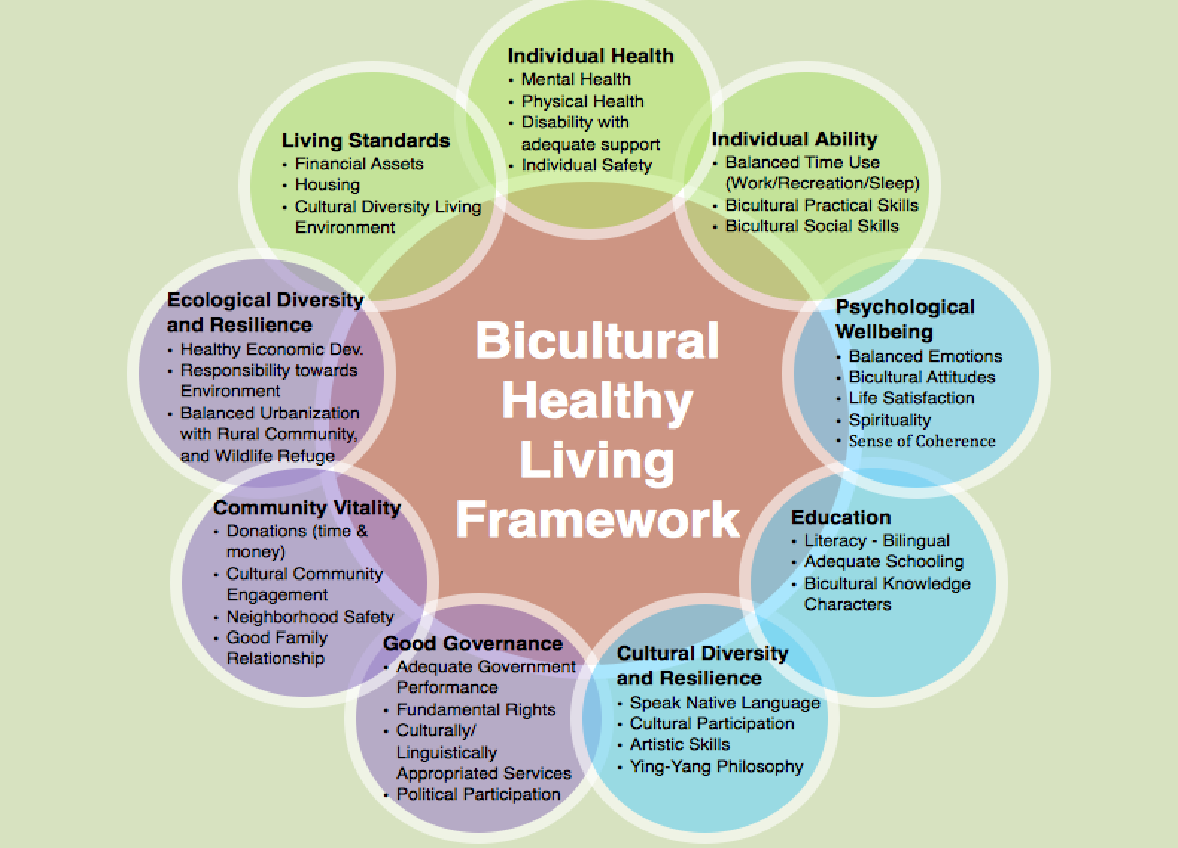
Biculturalism was derived from the acculturation literature. Also, it primarily has focused on cultural behaviors, such as media preferences, choice of friends, language use, and the like. Individuals who speak the language of their receiving cultural context and the language of their heritage culture are considered to be bicultural. Also, these individuals read magazines and watch television programs from both cultural backgrounds and have friends from both the heritage and receiving country. For example, a Chinese American may speak ‘Chinglish,’ and they might eat hamburgers with traditional Chinese vegetables. Also, they might mingle in social groups that have American and Chinese friends (Schwartz & Unger, 2010). Biculturalism goes beyond cultural behaviors and includes identifications, values, and cultural practices. It also means that the individual connects to other diverse cultures surrounding them and maintains the connection with their root culture.
Image courtesy: BALL
Furthermore, biculturalism refers to proficiency and comfort with the culture of the region or country where an individual settled and the person’s heritage culture. For example, this concept applies not only to immigrants who come from other countries but also to children of immigrants who are born and raised in the receiving society. This concept is likely to apply to immigrants children because they are deeply embedded in the heritage culture at home with their families. Moreover, this concept might apply to people living in ethnic enclaves where the heritage culture is maintained over generations and to individuals from visible minority groups. These minority groups may be identified as distinct from the majority of ethnic groups even though their families have been in the receiving society for multiple generations (Schwartz & Unger, 2010). Being a bicultural person has several healthy living benefits.
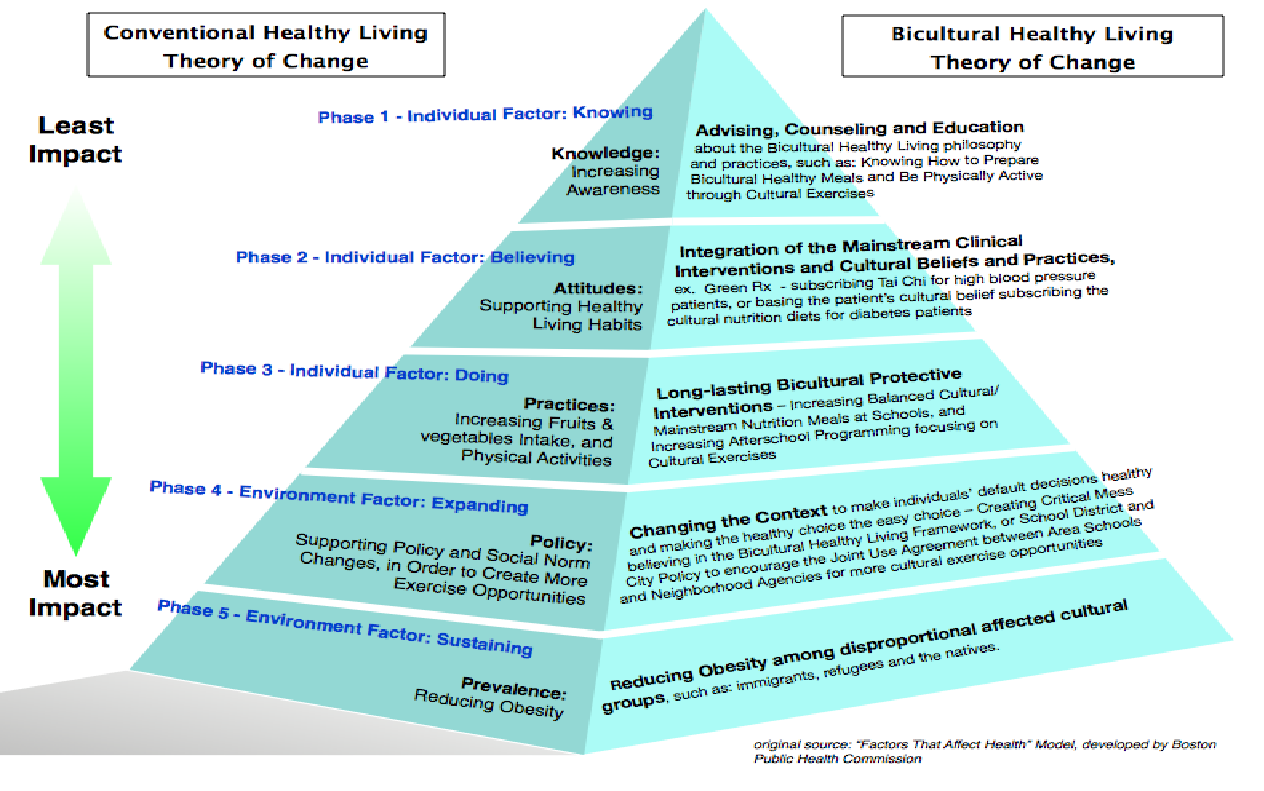
Biculturalism gives a person various values of healthy living. For instance, the person can enjoy both cultures, which means that the person behaves consistently with two cultural contexts and holds values from receiving cultural streams and identifying with two cultures. For example, as Hmong Americans, rather than just ‘Hmong’ or just ‘American,’ they may also intermix with their traditional Asian values. According to Schwartz & Unger, “The person might also feel an allegiance both to the United States and to China, as well as to the local Chinese community. She might feel Chinese compared to her American peers and feel American compared to her Chinese peers, but she can function effectively in both cultural contexts” (Schwartz & Unger, 2010). The bicultural healthy living concept evolved from biculturalism. This concept supports living healthier within two cultures in which people have adapted to live their lives.
Image courtesy: BALL
The followings are the several benefits offered by bicultural healthy living:
Through bicultural healthy living, an individual gets an attitude that supports a broader understanding of multiple levels of cultural identity. Also, there is potential to transcend religious, ethnic, and individual cultural differences that enrich diverse life experiences.
It promotes a more profound knowledge of universal values like respect, dignity, equality, justice, freedom, protection, pluralism, and kindness.
It encourages cognitive skills to think creatively, critically, and systematically. These include adopting a multicultural perspective that acknowledges distinct perspectives and an open mind to see and analyze issues from various angles.
It allows people to understand and support from an array of perspectives because an asset-based approach helps identify the skills and cultural implications of diverse life experiences.
It emphasizes a group of non-cognitive skills, such as social skills. Social skills include communication skills, networking aptitudes, and interacting with people from different backgrounds, cultures, perspectives, and origins. Moreover, it stresses the importance of resiliency, conflict resolution, and communication skills.
It highlights a group of behavioral capacities that allow individuals to act collaboratively and responsibly. This permits us to find cross-cultural solutions and strive for the collective good.
References
Schwartz, S. J., & Unger, J. B. (2010). Biculturalism and context: What is biculturalism, and when is it adaptive?: Commentary on Mistry and Wu. Human development, 53(1), 26. https://www.ncbi.nlm.nih.gov/pmc/articles/PMC2840244/
Why are Asian Americans less likely to seek and utilize mental health services? Also, have you ever wondered why some people have more difficulties accessing particular services, such as mental health, despite knowing that mental health is paramount for one’s well-being?
Poor mental health is a big problem. Based on the Center for Disease Control and Prevention (CDC) data, approximately 37 percent of Asian American adults, around 7.7 million people, reported poor mental health status in 2017 (Maxwell & Kwon, 2018). The National Alliance for Mental Health illness (NAMI) found that an estimated 77 percent of Asian Americans with mood disorders struggled to talk about their mental condition compared to their white counterparts, who were around 69 percent (Galleti, 2022). Mental health is a problem that needs to be solved.
Why is there a such racial disparity in accessing health care?
Several barriers prevent Asian Americans from seeking such a service. Most often, there is a misconception that Asian Americans do not need mental health services. Moreover, the rising healthcare cost prevents so many people from accessing the care they need. Besides this, discrimination, stigma, language barriers, and insufficient cultural competency and diversity within the mental health field make the problem more complex (Maxwell & Kwon, 2018). These factors contribute to people not accessing healthcare services.
Photo by Hung_Chung_Chih/iStock (Galleti, 2022)
Stigma is one of the principal barriers that prevent Asian Americans from seeking mental health services. According to a professor from UC Berkeley’s School of Social Welfare, there is some Asian cultures believe that mental issues are the outcome of a person’s past life wrongdoings. Therefore, this belief leads people to accept mental health disease as a hardship they must endure instead of seeking professional help and treatment (Galleti, 2022). Stigma is such a most significant barrier because it creates shame about not only mental issue but also promote a lack of awareness around resources that are available. Furthermore, racial stereotypes make it harder for people to seek professional help.
Additionally, the “model minority myth” is another hurdle that blocks Asian Americans from seeking help for mental well-being because it creates the illusion that the community does not have any problems. This also pressures people to hide their mental problems and not reach out for help (Galleti, 2022). Moreover, there are many people who feel that they must succeed and push themselves to fulfill the needs of their family members back home.
As stated by Maxwell and Kwon in the article, “The model minority myth can prevent disabled APAs [Asian Pacific Americans] from asking for help, accessing appropriate services and accommodations, and self-identifying as a person with a disability. It is critical that the disability rights movement is aware of the model minority myth and addresses it in its programs and practices.” (Maxwell & Kwon, 2018).
There are various ways that can contribute to improving access to mental health services in Asian American communities.
Provide affordable access to mental health services: Using national survey data from the CDC, the Center for American Progress stated that one in three Asian Americans diagnosed with depression could not use doctor services due to its cost. Therefore, improving access to healthcare can help our community to seek health services.
Remove language and stigmatic barriers to mental health services: An estimate of 35 percent of Asian Americans have limited English proficiency, and about 77 percent speak in their native language (non-English speaking) at home. Therefore, those foreign-born Asian Americans would benefit from services that provide better language accessibility in mental health services.
Promote cultural competency and diversity among mental health staff: The bias and cultural incompetency across healthcare professionals pose more barriers for Asian Americans while seeking mental health services. Asian Americans noted that they experience discrimination while visiting health clinics or doctors. Based on the study, the experience for Asian American immigrants is even worse because one in six reported discrimination (Maxwell & Kwon, 2018).As a result, providing a culturally diverse health staff might satisfy the needs of our community.
Taking care of our mental health is important because it will help usfunction well and perform our responsibility.